
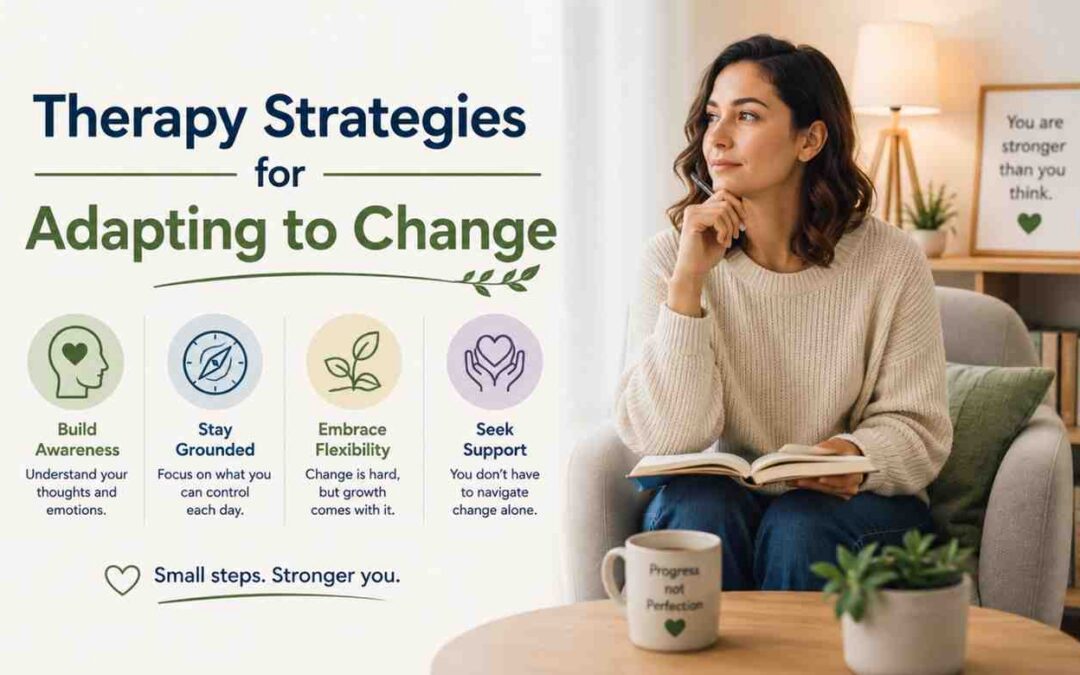
Therapy Strategies for Adapting to Change
Change can affect emotional stability, relationships, routines, and self-confidence in powerful ways. Career shifts, relationship changes, relocation, grief, financial stress, or health concerns often create emotional uncertainty and psychological pressure. Consequently, many individuals struggle with anxiety, fear, emotional exhaustion, or difficulty adjusting to unfamiliar circumstances. Therapy can provide practical strategies that support emotional balance, resilience, and healthier coping during transitional periods. Through structured techniques and emotional awareness, individuals can adapt more effectively, reduce overwhelm, and regain confidence while navigating major changes in life.
Why Change Feels Emotionally Difficult
Major changes often disrupt emotional security because people naturally rely on routine and predictability for psychological comfort.
The Mind Prefers Familiar Patterns
Daily habits, relationships, work environments, and responsibilities create emotional structure. When these familiar patterns shift suddenly, individuals may feel emotionally unsettled or mentally overwhelmed.
Consequently, uncertainty frequently increases stress because the brain attempts to predict potential risks and future outcomes constantly.
Several changes commonly linked to emotional stress include:
- Divorce or separation
- Career transitions
- Relocation
- Financial instability
- Retirement
- Health-related changes
These situations often require significant emotional adjustment.
Fear of Uncertainty Intensifies Stress
Change frequently creates unanswered questions about identity, stability, and future direction. Consequently, many individuals struggle with anxiety because they cannot control every possible outcome.
Fear often becomes stronger when people expect themselves to adapt immediately without emotional difficulty. However, emotional adjustment usually requires patience, structure, and gradual coping efforts.
Recognizing emotional discomfort as a normal response to change can reduce internal pressure significantly.
How Therapy Supports Emotional Adjustment
Therapy provides structured emotional support during periods of transition and uncertainty.
Therapy Encourages Emotional Awareness
Many individuals react automatically to stress without fully recognizing emotional patterns. Therapy helps people identify thoughts, behaviours, and emotional triggers affecting daily functioning.
Consequently, individuals may respond more intentionally rather than impulsively during stressful situations.
Several therapeutic goals often include:
- Improving emotional regulation
- Reducing anxiety
- Strengthening coping habits
- Building resilience
- Increasing self-awareness
These strategies can support healthier emotional adaptation over time.
Professional Support Reduces Isolation
Major life changes sometimes create emotional loneliness because individuals feel misunderstood or overwhelmed internally. Therapy provides a confidential environment where people can process emotions openly and safely.
Consequently, individuals often feel emotionally supported while developing practical strategies for adjustment and emotional recovery.
Supportive therapeutic conversations can improve emotional clarity significantly during uncertain periods.
Cognitive Behavioural Strategies for Change
Cognitive behavioural approaches often help individuals manage thoughts and behaviours connected to stress and uncertainty.
Identifying Negative Thought Patterns
Major transitions frequently trigger catastrophic thinking, excessive worry, or self-doubt. Consequently, individuals may assume worst-case outcomes without realistic evidence.
Therapy encourages recognition of these patterns while helping individuals evaluate situations more rationally.
Common negative thinking patterns may include:
- Fear-based assumptions
- Excessive self-criticism
- All-or-nothing thinking
- Overgeneralization
- Constant future-focused worry
Recognizing these habits often improves emotional balance significantly.
Replacing Harmful Thinking Habits
Therapists frequently help individuals challenge unrealistic fears and create healthier perspectives during stressful situations.
Consequently, emotional reactions may become calmer because individuals stop interpreting every change as immediate danger or failure.
Balanced thinking often supports:
- Better decision-making
- Reduced anxiety
- Improved confidence
- Stronger emotional control
- Healthier communication
These mental shifts can improve daily functioning during difficult transitions.
Mindfulness Techniques for Managing Stress
Mindfulness strategies often help individuals remain emotionally grounded during uncertain periods.
Present-Moment Awareness Reduces Anxiety
Stress frequently increases when individuals focus heavily on future uncertainty or past regrets. Mindfulness redirects attention toward present experiences instead of constant mental prediction.
Several mindfulness techniques include:
- Deep breathing exercises
- Body awareness practices
- Meditation sessions
- Sensory observation
- Calm reflective journaling
These methods can reduce emotional overwhelm gradually.
Mindfulness Improves Emotional Regulation
Emotionally overwhelmed individuals often react impulsively during stressful situations. Mindfulness creates mental space between emotional triggers and behavioural responses.
Consequently, people may communicate more calmly, make clearer decisions, and manage emotional discomfort more effectively.
Regular mindfulness practice often strengthens emotional resilience over time.
Acceptance Strategies During Major Transitions
Therapy frequently encourages acceptance of emotional discomfort rather than constant resistance against difficult feelings.
Avoiding Emotions Often Increases Stress
Many individuals suppress fear, sadness, or uncertainty because emotional discomfort feels overwhelming. However, emotional avoidance often increases internal tension significantly.
Consequently, suppressed emotions may appear later through irritability, anxiety, exhaustion, or emotional withdrawal.
Several unhealthy coping patterns may include:
- Social isolation
- Excessive distraction
- Emotional suppression
- Overworking constantly
- Avoiding important conversations
These behaviours may delay emotional adjustment instead of supporting healing.
Acceptance Encourages Emotional Flexibility
Acceptance does not mean giving up or approving painful situations. Instead, it involves acknowledging emotional experiences without excessive self-judgment.
Consequently, emotional energy shifts toward healthier coping and practical adjustment rather than constant internal struggle.
This emotional flexibility often supports stronger resilience during difficult life transitions.
The Role of Routine in Emotional Stability
Consistent routines frequently help individuals regain emotional balance during uncertain periods.
Structure Reduces Emotional Chaos
Major changes often disrupt familiar schedules and habits. Consequently, emotional instability may increase when daily life feels unpredictable.
Therapy often encourages rebuilding a manageable structure through simple routines such as:
- Regular sleep schedules
- Meal planning
- Physical activity
- Daily planning habits
- Consistent relaxation time
These habits can improve emotional stability significantly.
Small Habits Create Emotional Momentum
Large transitions sometimes make individuals feel emotionally powerless. Completing smaller daily routines often restores confidence gradually.
Consequently, manageable habits can reduce overwhelm while improving concentration, productivity, and emotional control.
Routine creates psychological predictability during uncertain periods of change.
Therapy Strategies for Managing Anxiety During Change
Anxiety commonly increases during transitions because uncertainty affects emotional security.
Grounding Techniques Reduce Panic
Grounding strategies help individuals reconnect with the present moment during emotional overwhelm.
Helpful grounding methods may include:
- Focused breathing
- Counting physical objects nearby
- Naming sensory details
- Walking outdoors
- Stretching exercises
These techniques often calm emotional intensity during stressful situations.
Exposure Strategies Reduce Fear
People frequently avoid uncomfortable situations during major changes. However, avoidance often strengthens anxiety over time.
Therapy may encourage gradual exposure to difficult situations instead of emotional withdrawal.
Consequently, individuals often build confidence through repeated manageable experiences rather than complete emotional certainty beforehand.
Gradual participation frequently improves emotional flexibility significantly.
Building Emotional Resilience Through Therapy
Resilience refers to the ability to recover emotionally after stressful experiences or significant life changes.
Therapy Strengthens Coping Skills
Emotionally resilient individuals still experience stress and uncertainty; however, they respond more effectively through healthier coping habits.
Therapy often strengthens resilience through:
- Emotional awareness
- Problem-solving skills
- Healthier boundaries
- Stress management
- Balanced thinking
These skills can improve long-term emotional well-being significantly.
Resilience Requires Practice
Many individuals expect emotional strength to appear immediately during difficult situations. However, resilience usually develops gradually through repeated coping experiences.
Consequently, therapy often emphasizes consistent progress instead of emotional perfection.
Patience and self-compassion frequently support stronger emotional recovery during major transitions.
How Therapy Improves Decision-Making During Change
Major transitions often involve emotionally difficult choices regarding relationships, careers, finances, or personal goals.
Stress Can Affect Judgment
Emotionally overwhelmed individuals may struggle with concentration, confidence, or rational thinking during important decisions.
Consequently, therapy often helps individuals separate emotional fear from practical reality.
Several therapeutic strategies may include:
- Clarifying priorities
- Identifying realistic options
- Challenging catastrophic thinking
- Reducing emotional impulsivity
- Creating structured action plans
These methods can improve decision clarity significantly.
Values-Based Thinking Encourages Clarity
Therapists often encourage individuals to focus on personal values rather than fear-driven reactions during major decisions.
Values may include:
- Family stability
- Independence
- Emotional wellbeing
- Career growth
- Personal fulfillment
Consequently, decisions often feel more meaningful and emotionally balanced when aligned with core priorities.
Communication Strategies During Life Changes
Change frequently affects relationships and emotional communication patterns.
Stress May Increase Conflict
Major transitions can reduce emotional patience and increase irritability. Consequently, misunderstandings often become more common during stressful periods.
Therapy may help individuals improve communication through:
- Active listening
- Calm emotional expression
- Boundary-setting
- Conflict resolution strategies
- Respectful discussion habits
These skills often strengthen relationships significantly.
Healthy Communication Reduces Emotional Pressure
Suppressing emotions frequently increases internal stress and relational tension. In contrast, clear, respectful communication can improve emotional support and reduce misunderstandings.
Consequently, individuals often feel less isolated while navigating difficult life adjustments.
Strong communication habits can improve both emotional well-being and relationship stability.
The Importance of Self-Compassion During Transition
Many individuals criticize themselves harshly while adjusting to change.
Self-Criticism Increases Emotional Exhaustion
People often expect immediate emotional strength during difficult transitions. Consequently, self-judgment may intensify when adjustment feels slower than expected.
Harsh internal dialogue may include:
- Blaming personal weakness
- Comparing progress unfairly
- Expecting perfection
- Ignoring emotional needs
- Minimizing personal stress
These habits often increase emotional pressure unnecessarily.
Compassion Supports Emotional Healing
Therapy frequently encourages individuals to respond to themselves with patience and emotional understanding during stressful periods.
Consequently, self-compassion can reduce anxiety, improve resilience, and strengthen emotional recovery.
Healthier internal dialogue often improves motivation and emotional stability significantly.
The Impact of Physical Health on Emotional Adaptation
Physical well-being strongly affects emotional resilience during major changes.
Stress Affects the Body Directly
Emotional stress frequently contributes to headaches, fatigue, digestive discomfort, sleep disruption, and muscle tension.
Consequently, therapy often encourages healthy lifestyle habits alongside emotional coping strategies.
Helpful physical health practices may include:
- Consistent sleep routines
- Regular exercise
- Balanced nutrition
- Hydration
- Limiting excessive caffeine
These habits support emotional regulation effectively.
Movement Improves Emotional Balance
Physical activity can reduce stress hormones while improving mood and concentration. Consequently, regular movement often strengthens emotional stability during difficult transitions.
Exercise does not eliminate emotional stress; however, it can improve resilience and recovery significantly.
Small, consistent habits often create meaningful emotional benefits over time.
When Therapy Becomes Especially Helpful
Some life changes create emotional strain that becomes difficult to manage independently.
Therapy Supports Complex Emotional Transitions
Grief, divorce, career loss, health diagnoses, financial instability, or family conflict may create overwhelming emotional pressure.
Consequently, therapy can provide structured support and healthier coping methods during these difficult experiences.
Several signs that professional support may help include:
- Persistent anxiety
- Emotional numbness
- Sleep disruption
- Difficulty functioning daily
- Ongoing emotional overwhelm
Professional guidance can improve emotional clarity significantly.
Therapy Encourages Long-Term Emotional Growth
The phrase major life changes therapy in Ontario frequently appears during emotional wellness searches because many individuals seek structured support while adapting to stressful transitions and emotional uncertainty.
Therapy often helps individuals build healthier coping strategies that remain useful beyond immediate challenges.
Long-term emotional growth frequently develops through consistent support and self-awareness.
Creating a Healthier Relationship With Change
Change remains unavoidable throughout life. Consequently, emotional flexibility often becomes more valuable than complete emotional control.
Adaptability Strengthens Confidence
People frequently underestimate their ability to adjust during difficult transitions. However, emotional resilience often improves after individuals successfully navigate uncertainty and stress.
Several adaptability habits may include:
- Accepting gradual progress
- Maintaining supportive relationships
- Practicing emotional awareness
- Staying open to adjustment
- Focusing on realistic goals
These habits can improve confidence during future changes significantly.
Growth Often Follows Discomfort
Many meaningful life changes involve temporary emotional discomfort. Consequently, emotional growth frequently develops through patience, flexibility, and healthy coping rather than avoidance.
Therapy strategies can support individuals while they rebuild stability, confidence, and emotional balance during uncertain periods.
Conclusion
Adapting to change often requires emotional patience, self-awareness, and practical coping strategies. Major transitions can create anxiety, uncertainty, and emotional exhaustion; however, therapy can provide structured support during these difficult periods. Mindfulness, cognitive behavioural techniques, emotional acceptance, healthy routines, and supportive communication often strengthen resilience significantly. Moreover, gradual adjustment and self-compassion can improve emotional recovery while reducing overwhelm. Through consistent therapeutic strategies and emotional flexibility, individuals can navigate change more confidently while maintaining healthier emotional balance and long-term psychological well-being.
FAQs
Why does change affect emotional well-being so strongly?
Change often disrupts routines, relationships, responsibilities, and emotional predictability simultaneously. Consequently, individuals may feel anxious, overwhelmed, or emotionally unstable during transitions. The mind naturally seeks familiarity and security, so unfamiliar situations frequently increase stress while creating uncertainty about future outcomes, personal identity, and long-term stability significantly.
How can therapy help during major life transitions?
Therapy provides emotional support, coping strategies, and structured problem-solving during stressful periods. Consequently, individuals may improve emotional regulation, reduce anxiety, and gain greater clarity regarding difficult situations. Professional support often helps people process uncertainty more calmly while developing healthier emotional habits and stronger resilience during significant transitions effectively.
What therapy techniques help manage stress during change?
Several therapeutic strategies support emotional stability during transitions, including mindfulness exercises, cognitive behavioural techniques, grounding methods, and emotional acceptance practices. Consequently, individuals may manage anxiety more effectively while improving emotional awareness and coping skills. Structured routines and healthy communication habits also strengthen emotional resilience during uncertain situations significantly.
Why does avoiding emotions make transitions harder?
Emotional suppression often increases internal tension because unresolved feelings continue affecting mental and physical well-being. Consequently, stress may appear through anxiety, irritability, exhaustion, or emotional withdrawal later. Healthy emotional expression through therapy, journaling, or supportive conversations usually supports healthier emotional processing and stronger long-term adjustment during major changes.
Can routines improve emotional stability during transitions?
Yes, routines create structure and predictability during uncertain periods. Regular sleep, exercise, meals, and planning habits can reduce emotional overwhelm significantly. Consequently, individuals often feel calmer and more emotionally balanced when maintaining manageable routines while adapting to difficult life changes, emotional uncertainty, and increased psychological stress consistently.
How does mindfulness help during stressful changes?
Mindfulness encourages present-focused awareness instead of constant worry about future uncertainty or past experiences. Consequently, individuals may respond more calmly during emotionally difficult situations. Breathing exercises, meditation, and grounding techniques often reduce emotional reactivity while improving concentration, emotional regulation, and overall psychological stability during stressful transitions effectively.
What role does self-compassion play during adjustment?
Self-compassion helps reduce harsh self-judgment during emotionally difficult periods. Many individuals expect immediate adaptation and criticize themselves when progress feels slow. Consequently, self-compassion improves emotional resilience by encouraging patience, healthier internal dialogue, and realistic expectations throughout challenging transitions and stressful life circumstances that require emotional adjustment over time.
Can therapy improve decision-making during transitions?
Yes, therapy can improve decision-making by reducing emotional overwhelm and encouraging balanced thinking. Consequently, individuals may evaluate options more realistically while separating fear-based reactions from practical priorities. Structured reflection, emotional awareness, and values-based thinking often strengthen confidence during difficult choices involving relationships, careers, finances, or personal goals.
When should someone seek therapy for life changes?
Professional support may become valuable when emotional stress begins affecting sleep, relationships, concentration, productivity, or daily functioning significantly. Persistent anxiety, emotional exhaustion, and difficulty coping with uncertainty often indicate the need for additional support. Consequently, therapy can provide healthier coping methods during emotionally overwhelming transitions and major personal changes.
Can adapting to change improve emotional resilience?
Yes, navigating difficult transitions can strengthen emotional resilience over time. Individuals often build greater confidence, flexibility, and coping ability through repeated adjustment experiences. Consequently, healthy adaptation may improve emotional awareness and stress management during future challenges while supporting stronger long-term psychological well-being and personal growth throughout life changes.