Burnout Counseling vs Therapy: What’s the Difference?
Burnout can affect emotional well-being, work performance, physical health, and personal relationships. When exhaustion becomes persistent, professional support often becomes an important step toward recovery. However, many people feel uncertain about whether they need counseling or therapy. Although both approaches provide valuable support, they differ in focus, depth, and treatment methods. Knowing these differences can help individuals choose the most suitable path for addressing burnout and restoring balance in daily life.
What Is Burnout?
Before comparing counseling and therapy, it helps to examine burnout itself.
Burnout involves a state of emotional, mental, and physical exhaustion caused by prolonged stress. While workplace pressure often contributes to burnout, family responsibilities, caregiving demands, academic stress, and financial concerns may also play a role.
Burnout can affect nearly every aspect of daily functioning. Consequently, many individuals struggle to maintain productivity, motivation, and emotional stability.
Common signs include:
- Constant fatigue
- Emotional exhaustion
- Reduced motivation
- Difficulty concentrating
- Increased irritability
- Sleep disturbances
- Feelings of detachment
- Declining performance
Without appropriate support, these symptoms can continue to worsen over time.
Why Professional Support Matters
Many people attempt to manage burnout independently. However, persistent symptoms often require structured intervention.
Professional support can help individuals:
- Identify stress triggers
- Improve coping strategies
- Restore emotional balance
- Develop healthier boundaries
- Improve resilience
- Strengthen self-awareness
Moreover, early intervention may prevent burnout from affecting long-term mental and physical health.
The choice between counseling and therapy often depends on the severity of symptoms and the individual’s specific needs.
What Is Burnout Counseling?
Burnout counseling typically focuses on current challenges and practical solutions.
Primary Purpose of Counseling
Counseling generally helps individuals address present-day concerns that contribute to stress and exhaustion.
Rather than examining deep emotional patterns, counseling often concentrates on:
- Current workplace issues
- Stress management
- Time management
- Boundary setting
- Problem-solving techniques
As a result, counseling frequently provides actionable strategies that individuals can implement immediately.
Short-Term Focus
One defining characteristic of counseling involves its shorter-term nature.
Counselors often work with clients to resolve specific challenges over a limited number of sessions.
Consequently, counseling may be particularly helpful when burnout stems from identifiable circumstances such as:
- Workplace conflicts
- Excessive workloads
- Career transitions
- Academic pressure
- Caregiving responsibilities
The goal often centers on helping individuals regain balance and improve daily functioning.
Key Features of Burnout Counseling
Several characteristics distinguish counseling from therapy.
Practical and Solution-Oriented Approach
Counseling frequently emphasizes practical tools.
These may include:
- Stress reduction techniques
- Communication skills
- Workplace boundary development
- Productivity improvements
- Self-care planning
Because of this practical focus, many individuals experience relatively quick improvements in day-to-day functioning.
Goal-Focused Sessions
Counseling sessions often follow structured objectives.
A counselor may help a client:
- Define burnout-related concerns
- Set realistic goals
- Monitor progress
- Adjust coping strategies
This approach can create a strong sense of direction and accountability.
Emphasis on Current Situations
Counseling usually prioritizes present circumstances.
Although personal history may receive some attention, the primary focus generally remains on addressing current stressors and challenges.
What Is Burnout Therapy?
Therapy often examines burnout from a broader psychological perspective.
Deeper Emotional Exploration
Unlike counseling, therapy frequently investigates the emotional patterns that contribute to burnout.
A therapist may examine:
- Long-standing beliefs
- Emotional responses
- Relationship dynamics
- Behavioral patterns
- Personal history
This deeper level of examination can reveal factors that continue to fuel stress and exhaustion.
Longer-Term Support
Therapy often involves a longer treatment process.
Rather than concentrating solely on immediate challenges, therapy may address recurring issues that affect multiple areas of life.
Consequently, individuals often gain greater insight into the factors influencing their emotional well-being.
Key Features of Burnout Therapy
Several elements distinguish therapy from counseling.
Focus on Emotional Patterns
Therapists frequently examine recurring emotional responses.
For example, burnout may connect with:
- Perfectionism
- Fear of failure
- Difficulty setting boundaries
- Chronic self-criticism
- People-pleasing tendencies
Addressing these patterns can support lasting change.
Behavioral and Cognitive Interventions
Therapy often incorporates structured psychological techniques.
These approaches may help individuals:
- Challenge negative thought patterns
- Improve emotional regulation
- Strengthen coping skills
- Develop healthier behaviors
As a result, therapy frequently targets both symptoms and underlying causes.
Greater Depth of Self-Awareness
Many individuals enter therapy seeking relief from burnout symptoms.
However, therapy often provides additional benefits by increasing self-awareness and emotional insight.
This deeper perspective may support long-term resilience.
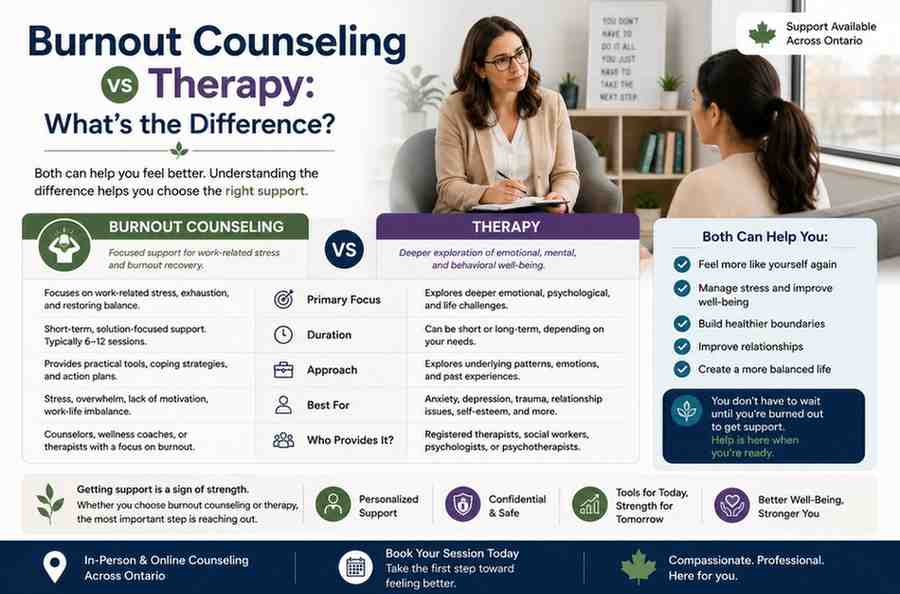
Comparing Counseling and Therapy
Although both approaches aim to improve well-being, important differences exist.
Focus
Counseling generally emphasizes present challenges and practical solutions.
In contrast, therapy often investigates emotional patterns and psychological influences that contribute to burnout.
Duration
Counseling frequently involves shorter-term support.
Therapy, however, may continue for a longer period depending on individual goals and needs.
Approach
Counseling often concentrates on problem-solving and skill-building.
Therapy typically combines symptom management with deeper emotional work.
Outcome Goals
Counseling commonly aims to restore immediate functioning and reduce stress.
Therapy often seeks both symptom relief and long-term emotional growth.
When Counseling May Be the Better Choice
Certain situations may make counseling particularly beneficial.
Burnout Has a Clear Cause
If burnout stems from a specific situation, counseling may provide effective support.
Examples include:
- Workplace changes
- Temporary stress increases
- Career decisions
- Academic demands
A structured, solution-focused approach may address these concerns effectively.
Symptoms Remain Mild to Moderate
Counseling may work well when burnout has not significantly affected emotional health.
Individuals who mainly need practical strategies often benefit from counseling interventions.
You Need Immediate Coping Tools
Some individuals seek quick improvements in stress management and daily functioning.
Counseling frequently provides practical tools that can be applied immediately.
When Therapy May Be the Better Choice
Certain circumstances may indicate a need for therapy instead.
Burnout Keeps Returning
Recurring burnout may suggest deeper issues that require additional attention.
Therapy can help identify patterns that repeatedly contribute to emotional exhaustion.
Emotional Distress Feels Significant
Therapy may provide greater support when burnout includes:
- Persistent sadness
- Anxiety
- Emotional numbness
- Low self-worth
- Chronic stress
Addressing these concerns often requires a more in-depth approach.
Past Experiences Affect Current Stress
Sometimes earlier experiences influence present-day reactions.
Therapy can help individuals identify and modify these patterns, leading to healthier emotional responses.
How do counseling and Therapy Address Burnout Differently?
Although both methods aim to reduce emotional exhaustion, they often use different pathways to achieve that goal.
Counseling Focuses on Immediate Improvement
Counseling generally helps people manage current pressures more effectively.
A counselor may assist with:
- Organizing responsibilities
- Improving work-life balance
- Creating healthier schedules
- Managing workplace stress
- Building communication skills
Consequently, many individuals notice practical improvements relatively quickly.
The process often centers on identifying current obstacles and creating realistic solutions. This structured approach appeals to people who want clear action steps and measurable progress.
Therapy Examines Root Causes
Therapy frequently goes beyond present circumstances.
Rather than focusing only on workload or stress levels, therapy often investigates why certain situations create overwhelming emotional reactions.
A therapist may explore:
- Core beliefs
- Emotional triggers
- Relationship patterns
- Personal expectations
- Long-standing behavioral habits
As a result, therapy often supports bigger emotional change and long-term resilience.
The Role of Emotional Awareness
Emotional awareness plays an important role in both counseling and therapy. However, each approach uses it differently.
Emotional Awareness in Counseling
Counseling helps individuals recognize emotional responses connected to current challenges.
For example, a person experiencing workplace burnout may identify feelings such as:
- Frustration
- Overwhelm
- Irritability
- Mental fatigue
After identifying these emotions, counseling often focuses on practical ways to manage them effectively.
Emotional Awareness in Therapy
Therapy frequently takes emotional awareness further.
A therapist may help individuals identify recurring emotional patterns and the factors that contribute to them.
Moreover, therapy often encourages deeper reflection regarding:
- Personal values
- Relationship dynamics
- Self-image
- Emotional habits
This process can create meaningful personal growth beyond burnout recovery.
How Each Approach Handles Stress Management
Stress management remains a central goal in burnout recovery.
Counseling-Based Stress Management
Counselors commonly teach practical stress-reduction strategies.
These may include:
- Relaxation techniques
- Scheduling adjustments
- Prioritization methods
- Boundary-setting skills
- Time management practices
Such tools help individuals regain a sense of control over daily demands.
Therapy-Based Stress Management
Therapists often combine stress-management techniques with psychological interventions.
For instance, therapy may address:
- Thought patterns that increase stress
- Emotional responses to pressure
- Internal expectations
- Fear-driven behaviors
Consequently, therapy frequently addresses both symptoms and contributing factors.
Workplace Burnout and Professional Support
Many burnout cases originate in professional environments.
How Counseling Helps With Workplace Burnout
Counseling can support employees who struggle with:
- Excessive workloads
- Difficult supervisors
- Poor work-life balance
- Career uncertainty
- Team conflicts
The focus typically remains on developing solutions that improve daily functioning and reduce stress.
How Therapy Helps With Workplace Burnout
Therapy may help individuals who consistently experience workplace exhaustion despite changing jobs or responsibilities.
In these situations, deeper emotional factors may influence workplace experiences.
Therapy can help identify patterns such as:
- Perfectionism
- Difficulty delegating tasks
- Excessive self-pressure
- Fear of disappointing others
Addressing these patterns can reduce vulnerability to future burnout.
The Importance of Boundary Setting
Healthy boundaries play a major role in burnout recovery.
Counseling and Boundary Development
Counselors often provide practical strategies for creating healthier boundaries.
Examples include:
- Limiting overtime
- Protecting personal time
- Managing digital communication
- Setting realistic expectations
These adjustments can significantly reduce stress levels.
Therapy and Emotional Boundaries
Therapy often examines why boundaries feel difficult to maintain.
Some individuals fear rejection or conflict when establishing limits.
By addressing these concerns, therapy may strengthen confidence and improve long-term boundary management.
Which Approach Provides Faster Results?
Many people want to know whether counseling or therapy produces quicker outcomes.
Counseling Often Produces Early Improvements
Because counseling focuses on practical challenges, noticeable changes may occur relatively quickly.
Individuals frequently report improvements in:
- Stress management
- Productivity
- Organization
- Daily routines
These changes can provide immediate relief from burnout symptoms.
Therapy Often Requires More Time
Therapy generally involves a deeper process.
Although progress may take longer, therapy often addresses factors that contribute to recurring burnout.
Consequently, the benefits may extend beyond immediate symptom reduction.
Can Counseling and Therapy Work Together?
Many people assume they must choose one approach exclusively.
However, counseling and therapy can complement each other effectively.
Combining Practical and Emotional Support
A combined approach may provide:
- Immediate coping strategies
- Deeper emotional insight
- Stronger resilience
- Better self-awareness
- Long-term behavioral change
This combination can create a well-rounded recovery process.
Adjusting Support as Needs Change
Burnout recovery often evolves.
An individual may begin with counseling to manage immediate stress and later pursue therapy to address deeper concerns.
Consequently, professional support can adapt to changing circumstances and goals.
Questions to Ask Before Choosing Counseling or Therapy
Selecting the right support often starts with self-reflection.
Consider asking:
- What factors contribute most to my burnout?
- Do I need practical solutions or deeper emotional support?
- How long have symptoms persisted?
- Have I experienced burnout repeatedly?
- Do emotional patterns affect my stress levels?
- What outcomes do I hope to achieve?
The answers can provide valuable direction when choosing a treatment approach.
Signs Counseling May Be Meeting Your Needs
Certain indicators suggest counseling is working effectively.
Improved Daily Functioning
You may notice:
- Better organization
- Reduced stress
- Stronger time management
- Increased productivity
These improvements often indicate successful progress.
Greater Confidence in Managing Challenges
As coping skills improve, individuals often feel more capable of handling responsibilities without becoming overwhelmed.
This confidence can significantly reduce burnout-related stress.
Signs Therapy May Be Meeting Your Needs
Therapy often produces different indicators of progress.
Healthier Emotional Responses
Many individuals notice:
- Reduced emotional reactivity
- Better emotional regulation
- Greater self-awareness
- Increased resilience
These changes often support long-term recovery.
Improved Relationship Patterns
Therapy frequently influences interpersonal relationships.
As emotional patterns change, communication and boundary-setting often improve as well.
This improvement can positively affect both personal and professional relationships.
Burnout Recovery Requires Individualized Support
No single solution works for everyone.
Several factors influence the most appropriate approach:
- Symptom severity
- Personal goals
- Emotional health
- Stress sources
- Available support systems
Therefore, selecting support should reflect individual circumstances rather than a one-size-fits-all model.
People seeking burnout therapy in Ontario often evaluate these factors carefully before deciding whether counseling, therapy, or a combination of both best matches their needs.
Common Misconceptions About Counseling and Therapy
Misunderstandings often prevent people from seeking support when they need it most.
Misconception: Counseling and Therapy Are Identical
While both provide professional support, they differ in scope and focus.
Counseling generally emphasizes present challenges and practical solutions. Therapy often investigates deeper emotional and behavioral patterns that contribute to ongoing difficulties.
Recognizing this distinction helps individuals choose the most appropriate option.
Misconception: Therapy Is Only for Severe Problems
Many people believe therapy is reserved for major mental health concerns.
However, therapy can support individuals experiencing burnout, stress, relationship difficulties, emotional exhaustion, or recurring behavioral patterns.
Early intervention often prevents challenges from becoming more severe.
Misconception: Counseling Offers Only Temporary Relief
Counseling certainly focuses on immediate concerns, yet its benefits can extend far beyond short-term symptom reduction.
When individuals consistently apply newly developed skills, counseling can support lasting improvements in stress management and daily functioning.
Misconception: Seeking Help Reflects Weakness
Professional support represents a proactive step toward better well-being.
Individuals who seek counseling or therapy often demonstrate self-awareness, responsibility, and a commitment to personal growth.
Consequently, asking for help should be viewed as a strength rather than a limitation.
Benefits Shared by Both Counseling and Therapy
Despite their differences, both approaches provide valuable advantages.
Improved Stress Management
Both counseling and therapy help individuals develop healthier responses to stress.
As coping skills improve, people often feel more capable of handling challenges without becoming overwhelmed.
Better Emotional Regulation
Professional support can strengthen emotional awareness and self-control.
This improvement often reduces frustration, irritability, and emotional exhaustion.
Healthier Relationships
Burnout frequently affects communication and interpersonal connections.
Both counseling and therapy can help individuals improve relationship dynamics through healthier communication and stronger boundaries.
Increased Self-Awareness
Greater awareness often leads to better decision-making.
Individuals who gain insight into their behaviors, emotions, and stress triggers frequently develop more effective coping strategies.
Building a Long-Term Recovery Plan
Recovery from burnout extends beyond symptom relief.
Developing Sustainable Habits
Long-term improvement often depends on healthy routines.
Helpful habits may include:
- Maintaining consistent sleep schedules
- Taking regular breaks
- Practicing stress-management techniques
- Prioritizing physical activity
- Protecting personal time
These practices support ongoing well-being.
Monitoring Stress Levels
Regular self-assessment can prevent future burnout.
Individuals who monitor their emotional and physical well-being often identify warning signs before they become overwhelming.
Consequently, early intervention becomes easier.
Creating Support Systems
Strong support networks contribute significantly to recovery.
Support may come from:
- Family members
- Friends
- Colleagues
- Professional counselors
- Therapists
A reliable support system can encourage during challenging periods.
Choosing the Right Professional Support
The decision between counseling and therapy should reflect personal circumstances rather than assumptions.
Individuals may benefit from counseling when they:
- Need practical solutions
- Face specific stressors
- Want short-term support
- Seek immediate coping tools
In contrast, therapy may be more appropriate when they:
- Experience recurring burnout
- Struggle with emotional patterns
- Face deeper psychological challenges
- Desire long-term personal growth
Some individuals ultimately benefit from combining both approaches.
The most effective choice depends on personal goals, symptom severity, and the factors contributing to burnout.
Key Differences at a Glance
The following points summarize the primary distinctions:
Burnout Counseling
- Focuses on current challenges
- Uses practical strategies
- Often short-term
- Goal-oriented approach
- Emphasizes immediate improvement
- Supports stress management and problem-solving
Burnout Therapy
- Examines emotional patterns
- Addresses root causes
- Often longer-term
- Encourages deeper self-awareness
- Focuses on lasting behavioral change
- Supports emotional growth and resilience
Both approaches can play valuable roles in recovery and personal well-being.
Conclusion
Burnout counseling and therapy share the goal of improving well-being, yet they achieve that goal through different approaches. Counseling typically focuses on practical solutions for current challenges, while therapy addresses deeper emotional patterns and long-term change. Both options offer valuable support, and neither approach is inherently better than the other. The right choice depends on individual needs, goals, and circumstances. By selecting appropriate support and applying effective strategies consistently, individuals can reduce burnout, strengthen resilience, and create a healthier balance in daily life.
FAQs
1. What is the main difference between burnout counseling and therapy?
Counseling generally focuses on present challenges and practical solutions, while therapy examines deeper emotional patterns and long-term behavioral influences. Counseling often provides immediate coping tools, whereas therapy frequently addresses underlying factors contributing to burnout and emotional exhaustion.
2. Can counseling help with workplace burnout?
Yes. Counseling often helps individuals manage workplace stress, improve communication, establish boundaries, and develop practical coping strategies. It can be particularly useful when burnout stems from identifiable professional challenges that require structured problem-solving and support.
3. How do I know whether I need therapy instead of counseling?
Therapy may be more appropriate when burnout repeatedly returns, emotional distress feels significant, or deeper behavioral patterns contribute to ongoing stress. Individuals seeking long-term emotional growth often benefit from a therapeutic approach.
4. How long does burnout counseling usually last?
The duration varies depending on individual goals and circumstances. Counseling often involves shorter-term support focused on resolving specific concerns. Some people achieve desired outcomes within several sessions, while others continue longer for additional guidance.
5. Can therapy help prevent future burnout?
Yes. Therapy frequently addresses the emotional and behavioral patterns that contribute to recurring burnout. By improving self-awareness, emotional regulation, and coping strategies, therapy can strengthen resilience and reduce future vulnerability to chronic stress.
6. Is burnout considered a mental health condition?
Burnout itself is generally viewed as a response to prolonged stress rather than a formal mental health disorder. However, burnout can affect emotional well-being significantly and may occur alongside anxiety, depression, or other psychological concerns.
7. Can counseling and therapy be used together?
Absolutely. Many individuals benefit from combining practical counseling strategies with deeper therapeutic work. This integrated approach can address immediate stress while also supporting long-term emotional growth and behavioral change.
8. Will professional support eliminate burnout?
Professional support can significantly reduce burnout symptoms and improve coping abilities. However, lasting improvement often requires ongoing attention to stress management, healthy boundaries, self-care practices, and lifestyle adjustments that support overall well-being.
9. What should I expect during the first session?
The first session usually involves discussing current challenges, stress levels, symptoms, goals, and personal circumstances. The professional will gather information and recommend an approach that aligns with the individual’s needs and recovery objectives.
10. Is seeking help for burnout worth considering early?
Yes. Early intervention often prevents symptoms from becoming more severe. Seeking support when burnout first appears can improve recovery outcomes, strengthen coping skills, and reduce the likelihood of prolonged emotional and physical exhaustion.