
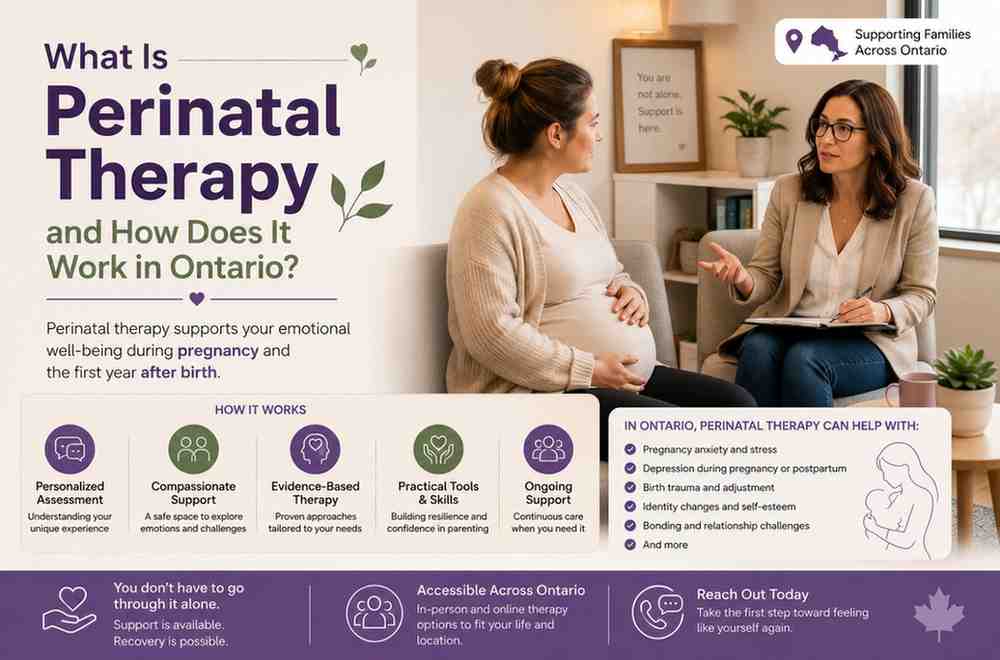
What Is Perinatal Therapy and How Does It Work in Ontario?
Pregnancy and the postpartum period bring significant emotional, physical, and lifestyle changes. While many individuals adjust successfully, others experience stress, anxiety, mood changes, or emotional challenges that affect daily life. Perinatal therapy provides professional support during this important stage, helping individuals manage emotional concerns, strengthen coping skills, and improve overall well-being. By addressing mental health needs during pregnancy and after childbirth, therapy can play a valuable role in supporting both parents and families throughout the perinatal journey.
What Is Perinatal Therapy?
Perinatal therapy focuses on mental and emotional health during pregnancy and the postpartum period.
The term “perinatal” generally refers to the time before and after childbirth. Consequently, therapy addresses concerns that may arise throughout this stage of life.
Purpose of Perinatal Therapy
The primary goal involves supporting emotional well-being during a period that often includes major changes and adjustments.
Therapy may help individuals:
- Manage anxiety
- Address mood changes
- Cope with stress
- Improve emotional resilience
- Strengthen relationships
- Prepare for parenthood
These benefits can contribute to healthier adjustment and improved quality of life.
Who Can Benefit From Perinatal Therapy?
Perinatal therapy may support:
- Pregnant individuals
- New parents
- Individuals planning for childbirth
- Those experiencing emotional difficulties during pregnancy
- Parents adjusting to postpartum responsibilities
Support needs vary significantly from person to person.
Why Mental Health Matters During the Perinatal Period
Emotional well-being influences many aspects of daily life during pregnancy and postpartum recovery.
Impact on Daily Functioning
Mental health challenges can affect:
- Sleep quality
- Relationships
- Work responsibilities
- Physical health
- Parenting confidence
Addressing concerns early may improve overall functioning and emotional stability.
Supporting Family Well-Being
Emotional health affects not only the individual but also family relationships.
When parents receive appropriate support, they often feel better equipped to manage responsibilities, communicate effectively, and adapt to changing circumstances.
Common Reasons People Seek Perinatal Therapy
People pursue therapy for many different reasons.
Pregnancy-Related Anxiety
Pregnancy often brings uncertainty and significant life changes.
Common concerns may include:
- Health worries
- Labor and delivery fears
- Parenting responsibilities
- Financial concerns
- Relationship adjustments
Therapy can help individuals manage these concerns more effectively.
Mood Changes During Pregnancy
Hormonal shifts and life transitions may contribute to emotional fluctuations.
While occasional mood changes are common, persistent emotional difficulties may benefit from professional support.
Postpartum Emotional Challenges
The postpartum period can present additional challenges.
Individuals may experience:
- Emotional overwhelm
- Persistent sadness
- Increased anxiety
- Difficulty adjusting to new responsibilities
- Feelings of isolation
Therapy provides a structured space to address these concerns.
How Perinatal Therapy Works
The therapy process typically begins with assessment and goal development.
Initial Assessment
During early sessions, therapists gather information regarding:
- Current concerns
- Emotional well-being
- Family circumstances
- Medical history
- Stressors
- Personal goals
This assessment helps shape an individualized treatment plan.
Goal Setting
Therapy goals vary depending on personal needs.
Examples may include:
- Reducing anxiety
- Improving coping skills
- Managing stress
- Strengthening confidence
- Enhancing emotional regulation
Clearly defined goals help guide the therapeutic process.
Topics Commonly Discussed in Perinatal Therapy
Sessions may address a wide range of emotional and practical concerns.
Adjusting to Pregnancy
Pregnancy often introduces significant lifestyle changes.
Therapy may focus on:
- Identity changes
- Body image concerns
- Emotional adjustments
- Relationship changes
- Future planning
Addressing these topics can improve confidence and emotional well-being.
Preparing for Parenthood
Many individuals experience uncertainty regarding parenting responsibilities.
Therapy can support preparation by helping individuals develop realistic expectations and coping strategies.
Managing Relationship Changes
Pregnancy and parenthood often affect relationships.
Therapists may help clients address:
- Communication challenges
- Shifting responsibilities
- Emotional needs
- Conflict resolution
Healthier communication often supports stronger family relationships.
The Importance of Emotional Support During Pregnancy
Support plays a critical role throughout the perinatal period.
Reducing Feelings of Isolation
Many individuals feel alone in their emotional experiences.
Therapy provides a supportive environment where concerns can be discussed openly and without judgment.
This support can reduce feelings of isolation and stress.
Encouraging Emotional Expression
People sometimes hesitate to discuss fears, worries, or difficult emotions.
Therapy encourages honest communication, allowing individuals to process emotions healthily and productively.
Therapeutic Approaches Used in Perinatal Therapy
Different approaches may be used depending on individual needs.
Cognitive and Behavioral Strategies
Many therapists use techniques that help individuals identify and change unhelpful thought patterns.
These strategies may support:
- Anxiety reduction
- Stress management
- Improved emotional regulation
- Healthier coping behaviors
Consequently, individuals often feel more confident and capable.
Supportive Counseling
Supportive counseling focuses on emotional expression, validation, and problem-solving.
This approach often helps individuals navigate challenges while building resilience and confidence.
Managing Anxiety Through Perinatal Therapy
Anxiety remains one of the most common concerns during pregnancy and postpartum recovery.
Identifying Anxiety Triggers
Therapy helps individuals recognize situations, thoughts, and concerns that contribute to anxiety.
Examples may include:
- Health concerns
- Parenting worries
- Financial stress
- Relationship changes
Awareness creates opportunities for healthier responses.
Developing Coping Strategies
Therapists often teach practical techniques that help reduce anxiety and improve emotional regulation.
These strategies may support greater confidence during periods of uncertainty.
Addressing Stress During the Perinatal Period
Stress management often becomes an important component of therapy.
Recognizing Sources of Stress
Stress can arise from multiple areas simultaneously.
Common sources include:
- Physical changes
- Family responsibilities
- Career demands
- Medical concerns
- Lifestyle adjustments
Therapy helps individuals identify and prioritize these concerns.
Creating Personalized Stress Management Plans
Effective stress management varies from person to person.
Therapists often help clients develop practical approaches that fit their unique circumstances and goals.
Supporting Emotional Well-Being After Childbirth
The postpartum period often involves significant adjustments. Consequently, emotional support remains important even after delivery.
Adjusting to New Responsibilities
Caring for a newborn introduces new routines, expectations, and demands.
Many parents experience challenges related to:
- Sleep disruption
- Time management
- Household responsibilities
- Relationship changes
- Personal identity shifts
Therapy helps individuals adapt to these changes more effectively while maintaining emotional balance.
Managing Emotional Overload
The combination of physical recovery and parenting responsibilities can feel overwhelming.
Therapists help clients identify sources of emotional strain and develop strategies that support healthier coping and improved resilience.
Perinatal Therapy and Self-Care
Self-care often becomes difficult during pregnancy and postpartum recovery.
Why Self-Care Matters
Many parents focus primarily on the needs of others.
However, emotional and physical well-being require attention as well.
Therapy encourages individuals to recognize the importance of:
- Rest
- Nutrition
- Physical activity
- Emotional support
- Personal time
These elements contribute to overall wellness.
Creating Sustainable Habits
Rather than promoting unrealistic routines, therapy helps individuals create practical self-care habits that fit their circumstances.
Consequently, self-care becomes more achievable and consistent.
How Therapy Helps Improve Emotional Regulation
Strong emotional regulation skills support healthier adjustment during the perinatal period.
Recognizing Emotional Triggers
Therapists often help clients identify situations that trigger intense emotional reactions.
Examples may include:
- Unexpected changes
- Relationship conflicts
- Parenting concerns
- Physical discomfort
Recognizing triggers often improves self-awareness.
Developing Healthier Responses
Therapy encourages individuals to respond thoughtfully rather than react impulsively.
As emotional regulation improves, many people feel more capable of managing challenges and uncertainty.
Building Confidence for Parenthood
Many new parents question their abilities.
Addressing Self-Doubt
Self-doubt can create significant stress.
Therapy helps individuals examine concerns objectively while recognizing existing strengths and capabilities.
This process often increases confidence and reduces unnecessary worry.
Developing Realistic Expectations
Unrealistic expectations frequently contribute to stress.
Therapists help clients establish practical expectations regarding parenting, recovery, and daily responsibilities.
As a result, individuals often feel less pressure and greater emotional stability.
The Role of Relationship Support in Perinatal Therapy
Relationships frequently change during pregnancy and after childbirth.
Improving Communication
Communication challenges may emerge when responsibilities increase.
Therapy can help partners:
- Express needs clearly
- Discuss concerns openly
- Resolve conflicts constructively
- Improve emotional support
These improvements often strengthen relationships.
Navigating Changing Roles
Parenthood often changes family dynamics.
Therapy helps individuals and couples adapt to new responsibilities while maintaining healthy connections.
Managing Identity Changes
Many people experience shifts in identity during the transition to parenthood.
Adjusting to New Roles
Pregnancy and parenthood introduce important new responsibilities.
While these changes can be rewarding, they may also create uncertainty.
Therapy provides a space to discuss these adjustments openly.
Maintaining a Sense of Self
Many parents struggle to balance personal identity with parenting responsibilities.
Therapy encourages reflection on personal goals, values, and needs.
This balance can support healthier emotional well-being.
How Perinatal Therapy Supports Decision-Making
The perinatal period often involves numerous important decisions.
Reducing Decision-Related Stress
Choices regarding childbirth, parenting, work, and family life can feel overwhelming.
Therapy helps individuals evaluate options thoughtfully rather than making decisions based solely on fear or pressure.
Increasing Confidence in Choices
As emotional clarity improves, individuals often feel more confident in their decisions.
This confidence can reduce anxiety and support healthier adjustment.
Virtual and In-Person Perinatal Therapy
Many people wonder which format may suit their needs best.
Benefits of In-Person Sessions
Face-to-face sessions provide a dedicated therapeutic environment.
Some individuals prefer this setting because it encourages focused communication and minimizes distractions.
Benefits of Virtual Sessions
Virtual therapy offers flexibility and convenience.
Many people seeking perinatal therapy in Ontario choose online sessions because they can access support while managing pregnancy-related demands or caring for a newborn.
Both formats can provide meaningful emotional support when individuals participate consistently.
Common Skills Developed Through Perinatal Therapy
Therapy often focuses on practical skill development.
Emotional Skills
Clients may strengthen:
- Emotional awareness
- Stress management
- Resilience
- Self-compassion
- Emotional regulation
These skills support long-term well-being.
Communication Skills
Improved communication can help individuals navigate relationships more effectively.
Therapy may support:
- Active listening
- Assertiveness
- Conflict resolution
- Boundary-setting
These abilities often improve family dynamics.
How Progress Is Measured During Therapy
Therapy involves ongoing evaluation and adjustment.
Reviewing Goals
Therapists frequently revisit goals established during earlier sessions.
Progress may include:
- Reduced anxiety
- Improved emotional regulation
- Better coping abilities
- Increased confidence
Regular reviews help maintain focus.
Adjusting Strategies When Needed
Each person’s needs evolve.
Therapists may modify strategies and goals as circumstances change.
This flexibility supports continued growth and effectiveness.
Challenges That Perinatal Therapy Can Address
The perinatal period may present a wide range of concerns.
Emotional Challenges
Therapy commonly addresses:
- Anxiety
- Persistent worry
- Emotional overwhelm
- Mood fluctuations
- Stress
Professional support can help individuals manage these challenges more effectively.
Practical Challenges
Sessions may also address practical concerns such as:
- Time management
- Work-life balance
- Family expectations
- Parenting adjustments
Addressing both emotional and practical issues often creates more meaningful results.
The Importance of Early Support
Seeking support early can make a meaningful difference during pregnancy and postpartum recovery.
Addressing Concerns Before They Escalate
Emotional challenges often become easier to manage when they receive attention early.
Therapy can help individuals recognize warning signs such as:
- Persistent anxiety
- Ongoing stress
- Emotional exhaustion
- Difficulty coping
- Relationship strain
Early intervention often supports healthier adjustment and improved emotional well-being.
Creating a Strong Foundation
Therapy helps individuals build skills that remain valuable throughout pregnancy, postpartum recovery, and future parenting experiences.
Consequently, emotional resilience often becomes stronger over time.
How Therapy Encourages Long-Term Well-Being
Perinatal therapy focuses on more than immediate symptom relief.
Developing Sustainable Coping Strategies
Many individuals benefit from practical tools that continue supporting them after therapy concludes.
Examples include:
- Stress-management techniques
- Emotional regulation skills
- Communication strategies
- Self-care planning
- Boundary-setting practices
These tools often support long-term emotional health.
Strengthening Resilience
Resilience helps people adapt to change, recover from setbacks, and manage uncertainty.
Therapy encourages habits and perspectives that strengthen resilience during challenging periods.
As a result, future difficulties often feel more manageable.
Benefits of Perinatal Therapy for Families
The positive effects of therapy frequently extend beyond the individual receiving support.
Improved Family Communication
When emotional well-being improves, communication often becomes more effective.
Family members may experience:
- Greater understanding
- Reduced conflict
- Stronger emotional support
- Better collaboration
These benefits can improve family relationships significantly.
Healthier Home Environment
Emotional stability often contributes to a calmer and more supportive home environment.
Consequently, both parents and children may benefit from improved emotional functioning and communication.
What to Expect During Ongoing Sessions
Therapy evolves as individuals make progress.
Continued Emotional Support
Therapists provide ongoing opportunities to discuss concerns, challenges, and successes.
This support helps individuals navigate changing circumstances throughout the perinatal period.
Skill Development and Practice
Sessions often include opportunities to strengthen practical skills.
Examples may involve:
- Managing stress
- Improving communication
- Practicing emotional regulation
- Developing coping strategies
Regular practice often improves confidence and effectiveness.
Reviewing Progress
Therapists frequently evaluate progress toward established goals.
This process helps identify successes while highlighting areas that may require additional attention.
Common Misconceptions About Perinatal Therapy
Several misconceptions prevent some individuals from seeking support.
Misconception: Therapy Is Only for Serious Problems
Many people believe therapy is necessary only during severe emotional distress.
However, therapy can also support individuals who simply want help managing stress, adjusting to change, or strengthening coping skills.
Misconception: Emotional Challenges Are a Sign of Weakness
Pregnancy and postpartum recovery involve major life changes.
Experiencing emotional difficulties during this period does not indicate weakness.
Seeking support often reflects proactive self-care and commitment to well-being.
Misconception: Emotional Concerns Will Always Resolve on Their Own
While some challenges improve naturally, others may persist or worsen without support.
Therapy provides tools and strategies that can help individuals address concerns more effectively.
Signs That Therapy May Be Helping
Positive changes often develop gradually.
Improved Emotional Stability
Many individuals notice:
- Reduced anxiety
- Better emotional regulation
- Increased confidence
- Greater resilience
These improvements often indicate meaningful progress.
Healthier Daily Functioning
People may also experience:
- Better sleep habits
- Improved relationships
- More effective coping skills
- Increased ability to manage responsibilities
Such outcomes can enhance overall well-being.
Greater Confidence in Parenting and Life Transitions
As therapy progresses, many individuals feel more capable of handling new responsibilities and adapting to change.
This confidence often contributes to healthier adjustment throughout the perinatal period.
Key Benefits of Perinatal Therapy
Perinatal therapy can support individuals by helping them:
- Manage anxiety
- Reduce stress
- Improve emotional regulation
- Strengthen resilience
- Build confidence
- Develop coping strategies
- Improve communication
- Navigate relationship changes
- Adjust to parenthood
- Maintain self-care habits
- Strengthen emotional awareness
- Support family well-being
- Improve decision-making
- Address postpartum challenges
- Enhance overall emotional health
Together, these benefits support healthier adjustment during pregnancy and postpartum recovery.
Conclusion
Perinatal therapy provides valuable emotional support during one of life’s most significant transitions. By helping individuals manage anxiety, cope with stress, improve communication, and strengthen resilience, therapy supports healthier adjustment throughout pregnancy and postpartum recovery. Moreover, it encourages emotional awareness, confidence, and sustainable coping strategies that benefit both individuals and families. Whether addressing specific concerns or preparing for the challenges of parenthood, perinatal therapy can play an important role in promoting long-term emotional well-being and a more positive parenting journey.
FAQs
1. What is perinatal therapy?
Perinatal therapy is a form of mental health support designed for individuals during pregnancy and the postpartum period. It focuses on emotional well-being, stress management, anxiety reduction, coping skills, and adjustment to the many changes associated with parenthood.
2. Who can benefit from perinatal therapy?
Pregnant individuals, new parents, and those adjusting to parenthood may benefit from therapy. It can support people experiencing anxiety, stress, emotional overwhelm, relationship challenges, or difficulty adapting to pregnancy and postpartum responsibilities.
3. Is perinatal therapy only for postpartum concerns?
No. Perinatal therapy supports individuals both during pregnancy and after childbirth. Many people seek support before delivery to manage anxiety, prepare for parenthood, and address emotional concerns that arise throughout pregnancy.
4. What happens during a perinatal therapy session?
Sessions typically involve discussing emotional concerns, identifying challenges, developing coping strategies, reviewing goals, and building skills related to emotional regulation, communication, and stress management. The approach varies based on individual needs and circumstances.
5. Can therapy help with pregnancy-related anxiety?
Yes. Therapy often helps individuals identify anxiety triggers, develop coping strategies, challenge unhelpful thought patterns, and improve emotional regulation. These techniques can reduce anxiety and increase confidence during pregnancy.
6. Does perinatal therapy involve partners?
Some therapy sessions may include partners when relationship concerns, communication challenges, or parenting adjustments affect family well-being. Partner involvement depends on individual goals and the therapeutic approach being used.
7. Are virtual perinatal therapy sessions effective?
Many people find virtual therapy highly effective. Online sessions provide flexibility and accessibility while still offering emotional support, practical strategies, and professional guidance throughout pregnancy and postpartum recovery.
8. How long does perinatal therapy last?
The duration varies depending on personal goals, emotional needs, and individual circumstances. Some people attend therapy for a short period, while others continue longer to address ongoing concerns and strengthen coping skills.
9. Can therapy help with adjusting to parenthood?
Yes. Therapy often focuses on confidence-building, stress management, emotional regulation, relationship adjustments, and realistic expectations. These areas can help individuals adapt more comfortably to parenting responsibilities and lifestyle changes.
10. Why is emotional support important during the perinatal period?
Emotional support can improve coping abilities, reduce stress, strengthen relationships, and enhance overall well-being. Addressing emotional concerns early may help individuals navigate pregnancy and postpartum challenges more effectively.