
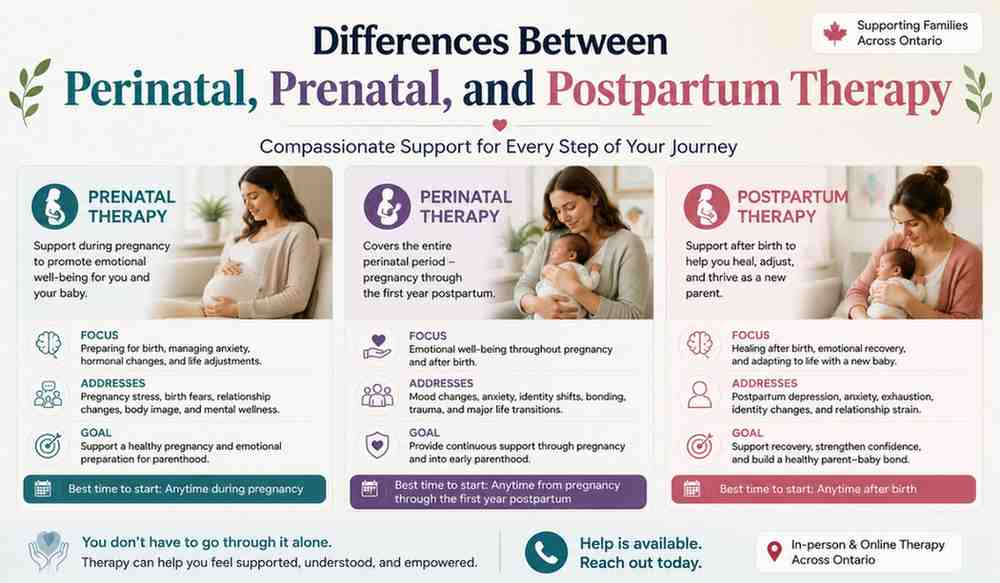
Differences Between Perinatal, Prenatal, and Postpartum Therapy
Pregnancy and early parenthood bring emotional, physical, and psychological changes that affect every individual differently. During this period, professional mental health support can help people manage challenges, strengthen coping skills, and improve overall well-being. However, many individuals use the terms perinatal, prenatal, and postpartum therapy interchangeably, even though they serve different purposes. Knowing how these therapies differ can help people choose the most appropriate support based on their stage of pregnancy, emotional needs, and personal circumstances.
Why Does Specialized Therapy Matter During Pregnancy and Parenthood?
Pregnancy and the transition to parenthood often involve major life adjustments.
While many individuals adapt successfully, others may experience emotional challenges that affect daily functioning.
Common Emotional Challenges
People may experience:
- Anxiety
- Stress
- Mood fluctuations
- Relationship concerns
- Parenting worries
- Identity changes
- Emotional overwhelm
Professional support can help address these concerns before they significantly affect well-being.
Benefits of Specialized Therapy
Targeted therapy often helps individuals:
- Build emotional resilience
- Improve coping abilities
- Strengthen relationships
- Develop realistic expectations
- Improve confidence
Consequently, therapy can provide valuable support throughout different stages of the parenting journey.
What Is Perinatal Therapy?
Perinatal therapy covers a broad period surrounding pregnancy and childbirth.
Definition of Perinatal Therapy
The term “perinatal” generally refers to the time during pregnancy and the postpartum period.
Therefore, perinatal therapy addresses emotional concerns that arise both before and after childbirth.
This broad scope distinguishes it from prenatal and postpartum therapy.
Main Areas of Focus
Perinatal therapy may address:
- Pregnancy-related anxiety
- Emotional adjustment
- Relationship changes
- Parenting concerns
- Postpartum challenges
- Stress management
Because it spans multiple stages, it often provides continuity of care throughout the transition to parenthood.
What Is Prenatal Therapy?
Prenatal therapy focuses specifically on the period before childbirth.
Definition of Prenatal Therapy
Prenatal therapy supports individuals during pregnancy.
The primary goal involves helping people manage emotional, psychological, and lifestyle challenges that arise before delivery.
This therapy does not typically focus on postpartum concerns unless preparation for the postpartum period becomes part of treatment planning.
Main Areas of Focus
Prenatal therapy commonly addresses:
- Pregnancy anxiety
- Fear of labor
- Health-related worries
- Body image concerns
- Lifestyle adjustments
- Emotional preparation for parenthood
Consequently, prenatal therapy concentrates on experiences occurring during pregnancy itself.
What Is Postpartum Therapy?
Postpartum therapy focuses on emotional well-being after childbirth.
Definition of Postpartum Therapy
The postpartum period begins after delivery and continues throughout the adjustment to parenthood.
Postpartum therapy addresses emotional, psychological, and practical concerns that emerge during this stage.
Main Areas of Focus
Common topics include:
- Emotional adjustment after childbirth
- Parenting stress
- Sleep-related challenges
- Relationship changes
- Confidence concerns
- Mood-related difficulties
Because postpartum experiences differ from pregnancy-related experiences, therapy often requires a distinct focus.
The Primary Difference Between These Therapies
Although all three forms of therapy support mental health, timing remains the biggest difference.
Prenatal Therapy Timeline
Prenatal therapy occurs during pregnancy.
The focus remains on emotional preparation, pregnancy-related concerns, and coping with changes before childbirth.
Postpartum Therapy Timeline
Postpartum therapy occurs after childbirth.
Treatment focuses on adjusting to parenting responsibilities and navigating challenges that emerge after delivery.
Perinatal Therapy Timeline
Perinatal therapy includes both periods.
As a result, individuals may begin therapy during pregnancy and continue receiving support after childbirth.
This broader timeline often allows for greater continuity.
How Emotional Concerns Differ Across Stages
Each stage introduces unique emotional challenges.
Prenatal Emotional Concerns
Pregnancy may create concerns such as:
- Fear of labor
- Medical worries
- Physical changes
- Parenting uncertainty
- Future planning
Therapy helps individuals manage these concerns effectively.
Postpartum Emotional Concerns
After childbirth, emotional concerns often shift toward:
- Recovery
- Parenting responsibilities
- Sleep deprivation
- Family adjustments
- Relationship dynamics
Therefore, therapeutic goals frequently change as circumstances evolve.
Perinatal Emotional Concerns
Perinatal therapy addresses both prenatal and postpartum concerns, providing support across the entire transition.
This flexibility often makes it suitable for individuals seeking ongoing care.
Goals of Prenatal Therapy
Prenatal therapy focuses on preparing individuals emotionally and mentally for childbirth and parenthood.
Reducing Pregnancy-Related Anxiety
Many individuals experience anxiety regarding labor, delivery, or future responsibilities.
Therapy helps develop coping strategies that reduce emotional distress and increase confidence.
Building Emotional Readiness
Preparation involves more than practical planning.
Prenatal therapy often encourages emotional readiness through self-awareness, stress management, and realistic expectations.
Strengthening Support Systems
Therapists may help clients identify resources and relationships that can provide support throughout pregnancy and after childbirth.
Strong support systems often improve emotional well-being significantly.
Goals of Postpartum Therapy
Postpartum therapy focuses on adjustment and recovery.
Supporting Emotional Recovery
The period after childbirth often involves significant emotional and physical changes.
Therapy provides a space to process these experiences and develop effective coping strategies.
Improving Confidence in Parenting
Many new parents experience uncertainty regarding caregiving responsibilities.
Therapy helps build confidence through emotional support and practical problem-solving.
Managing Daily Stressors
Postpartum therapy frequently addresses challenges such as:
- Sleep disruption
- Family responsibilities
- Relationship adjustments
- Work-life balance concerns
These issues often affect emotional well-being during early parenthood.
Part 2 of 3
Goals of Perinatal Therapy
Perinatal therapy combines many elements of both prenatal and postpartum support.
Providing Continuity of Care
One of the primary advantages involves continuity.
Individuals can begin therapy during pregnancy and continue receiving support after childbirth.
Consequently, therapists can address evolving concerns without interruption.
Supporting Long-Term Emotional Well-Being
Because perinatal therapy spans multiple stages, it often focuses on long-term emotional health rather than a single period.
Therapists may help clients:
- Prepare for childbirth
- Manage emotional changes
- Strengthen coping skills
- Adjust to parenthood
This broader approach supports ongoing well-being.
Differences in Therapy Topics
Although these therapies share certain similarities, session topics often differ significantly.
Topics Commonly Addressed in Prenatal Therapy
Prenatal sessions may focus on:
- Labor concerns
- Pregnancy-related anxiety
- Physical changes
- Birth planning
- Parenting expectations
- Relationship preparation
These discussions help individuals prepare emotionally for childbirth.
Topics Commonly Addressed in Postpartum Therapy
Postpartum therapy frequently addresses:
- Recovery after childbirth
- Parenting adjustments
- Emotional overwhelm
- Sleep challenges
- Family dynamics
- Daily stress management
The focus shifts toward life after delivery.
Topics Commonly Addressed in Perinatal Therapy
Perinatal therapy may include all of the above concerns.
As circumstances change, therapy adapts to meet evolving needs.
How Therapy Approaches May Differ
Treatment methods often overlap, yet emphasis can vary depending on timing.
Prenatal Therapy Approaches
Prenatal sessions frequently focus on preparation and prevention.
Therapists may emphasize:
- Stress reduction
- Emotional readiness
- Anxiety management
- Confidence building
These strategies help individuals feel more prepared for upcoming changes.
Postpartum Therapy Approaches
Postpartum sessions often prioritize adjustment and recovery.
Common areas of focus include:
- Emotional regulation
- Parenting confidence
- Relationship support
- Coping skills
These interventions help individuals navigate new responsibilities effectively.
Perinatal Therapy Approaches
Perinatal therapy combines preparation, adjustment, and ongoing support.
This flexibility allows treatment to evolve alongside changing circumstances.
Relationship Support Across Different Stages
Relationships often experience significant changes during pregnancy and parenthood.
Relationship Support During Pregnancy
Prenatal therapy may help couples discuss:
- Parenting expectations
- Communication concerns
- Future responsibilities
- Emotional needs
Addressing these issues early can strengthen relationships before childbirth.
Relationship Support After Childbirth
Postpartum therapy often focuses on adapting to new family dynamics.
Common concerns include:
- Division of responsibilities
- Communication challenges
- Reduced personal time
- Increased stress
Therapy helps individuals address these issues constructively.
Relationship Support Throughout the Perinatal Period
Perinatal therapy offers support across both stages.
As a result, couples and individuals can continue working on relationship goals throughout pregnancy and early parenthood.
Anxiety Management in Each Therapy Type
Anxiety frequently appears during pregnancy and after childbirth.
Prenatal Anxiety Concerns
During pregnancy, anxiety often centers on:
- Labor and delivery
- Health concerns
- Medical procedures
- Parenting readiness
Therapy provides tools that help manage these worries effectively.
Postpartum Anxiety Concerns
After childbirth, anxiety may shift toward:
- Infant care
- Safety concerns
- Sleep disruption
- Daily responsibilities
Therapeutic strategies adapt accordingly.
Perinatal Anxiety Support
Perinatal therapy addresses anxiety across both periods, creating continuity in treatment and support.
The Role of Emotional Preparation
Preparation remains an important distinction between prenatal and postpartum care.
Preparing for Childbirth
Prenatal therapy often helps individuals prepare emotionally for labor, delivery, and parenthood.
This preparation can reduce uncertainty and improve confidence.
Adjusting After Childbirth
Postpartum therapy focuses less on preparation and more on adaptation.
The emphasis shifts toward managing current realities and developing practical coping strategies.
Perinatal Therapy Bridges Both Phases
Perinatal therapy supports emotional preparation before childbirth and emotional adjustment afterward.
This combination often creates a seamless therapeutic experience.
Benefits of Perinatal Therapy for Long-Term Support
Some individuals prefer ongoing support rather than transitioning between different services.
Consistent Therapeutic Relationship
A consistent therapist may gain deeper insight into an individual’s experiences over time.
This continuity often strengthens communication and trust.
Adapting Goals as Needs Change
Goals established during pregnancy may evolve after childbirth.
Perinatal therapy allows these goals to change naturally without requiring a new therapeutic process.
Many individuals seeking perinatal therapy in Ontario appreciate this continuity because it provides support throughout multiple stages of the parenting journey.
Choosing the Right Therapy Based on Timing
Selecting the most appropriate option often depends on where an individual is in the parenting process.
When Prenatal Therapy May Be Most Appropriate
Prenatal therapy may suit individuals who:
- Are currently pregnant
- Experience pregnancy-related anxiety
- Want emotional preparation for childbirth
- Need support before delivery
The focus remains on challenges that arise during pregnancy.
When Postpartum Therapy May Be Most Appropriate
Postpartum therapy may benefit individuals who:
- Have recently given birth
- Face parenting-related stress
- Need emotional support during recovery
- Struggle with adjustment after childbirth
Treatment focuses on current postpartum concerns.
When Perinatal Therapy May Be Most Appropriate
Perinatal therapy may be ideal for individuals seeking support throughout both pregnancy and postpartum recovery.
This broader approach often provides greater continuity and flexibility.
Shared Benefits Across All Three Therapy Types
Despite their differences, these therapies share several important benefits.
Improved Emotional Well-Being
Each approach helps individuals manage emotions more effectively.
As coping skills improve, emotional resilience often increases as well.
Stronger Relationships
Therapy frequently supports healthier communication, stronger boundaries, and better relationship functioning.
These improvements can benefit both parents and families.
Greater Confidence
Whether preparing for childbirth or adjusting to parenthood, therapy often strengthens confidence and self-awareness.
These benefits can support healthier long-term adjustment.
Part 3 of 3
Common Misconceptions About Perinatal, Prenatal, and Postpartum Therapy
Many people misunderstand the differences between these forms of support.
Misconception: They Are the Same
Although all three focus on emotional well-being related to pregnancy and parenthood, they differ in timing and scope.
Prenatal therapy focuses on pregnancy, postpartum therapy focuses on life after childbirth, and perinatal therapy spans both stages.
Recognizing this distinction helps individuals select the most appropriate support.
Misconception: Therapy Is Only Necessary During a Crisis
Many individuals assume therapy becomes necessary only when emotional challenges become severe.
However, therapy can also help with preparation, stress management, emotional adjustment, and confidence building.
Early support often helps prevent difficulties from becoming more overwhelming.
Misconception: Emotional Challenges Are Uncommon
Pregnancy and parenthood involve major life transitions.
Experiencing stress, uncertainty, or emotional difficulties during these periods is common.
Therapy provides practical tools and emotional support that can help individuals navigate these challenges more effectively.
How Therapy Supports Family Well-Being
The benefits of therapy often extend beyond the individual receiving support.
Improved Communication
When emotional well-being improves, communication often becomes more effective.
Individuals frequently become better equipped to:
- Express needs clearly
- Discuss concerns openly
- Resolve disagreements constructively
- Provide emotional support
These improvements can strengthen family relationships significantly.
Healthier Family Dynamics
Therapy can help individuals manage stress more effectively.
Consequently, family interactions often become calmer, more supportive, and more collaborative.
This positive environment benefits everyone involved.
The Importance of Early Intervention
Seeking support early can improve outcomes across all stages.
Recognizing Concerns Promptly
Emotional difficulties often become easier to address when identified early.
Examples may include:
- Persistent worry
- Ongoing stress
- Emotional overwhelm
- Relationship strain
- Confidence concerns
Addressing these issues early often supports healthier adjustment.
Building Strong Foundations
Early support helps individuals develop coping strategies before challenges become more difficult to manage.
These skills often remain valuable throughout pregnancy, postpartum recovery, and future parenting experiences.
How Therapy Goals Change Over Time
Therapy goals frequently evolve as circumstances change.
Goals During Pregnancy
During pregnancy, goals may include:
- Reducing anxiety
- Preparing for labor
- Improving emotional readiness
- Strengthening relationships
These objectives support preparation and confidence.
Goals After Childbirth
Following delivery, goals often shift toward:
- Managing daily responsibilities
- Improving coping skills
- Strengthening parenting confidence
- Supporting emotional recovery
The focus adapts to current needs and challenges.
Goals Throughout the Perinatal Period
Perinatal therapy allows goals to evolve naturally.
As circumstances change, treatment can continue addressing emerging concerns without interruption.
Signs Therapy Is Helping
Progress often appears gradually rather than all at once.
Improved Emotional Stability
Many individuals notice:
- Reduced anxiety
- Better emotional regulation
- Increased resilience
- Greater confidence
These improvements often indicate meaningful progress.
Healthier Relationships
Improved communication and stronger emotional awareness frequently contribute to healthier relationships.
As stress becomes more manageable, relationship satisfaction often improves as well.
Greater Confidence in Parenting
Confidence often grows as individuals develop coping skills and realistic expectations.
This confidence can support healthier adjustment during both pregnancy and parenthood.
Key Differences at a Glance
The following summary highlights the primary distinctions among these therapy types.
Prenatal Therapy
- Occurs during pregnancy
- Focuses on preparation
- Addresses pregnancy-related concerns
- Supports emotional readiness
- Helps manage labor-related anxiety
Postpartum Therapy
- Occurs after childbirth
- Focuses on adjustment and recovery
- Addresses parenting challenges
- Supports emotional well-being after delivery
- Helps manage postpartum stress
Perinatal Therapy
- Covers pregnancy and postpartum periods
- Provides continuity of care
- Addresses concerns across multiple stages
- Supports long-term emotional health
- Adapts to changing needs over time
Each approach offers valuable support depending on individual circumstances and timing.
Conclusion
Perinatal, prenatal, and postpartum therapy each serve important yet distinct roles in supporting emotional well-being during pregnancy and parenthood. Prenatal therapy focuses on preparation before childbirth, postpartum therapy emphasizes adjustment after delivery, and perinatal therapy provides support across both stages. While their timelines and goals differ, all three approaches help individuals strengthen coping skills, improve confidence, manage stress, and navigate major life transitions more effectively. Choosing the right type of support can contribute significantly to healthier emotional adjustment and long-term family well-being.
FAQs
1. What is the main difference between prenatal and postpartum therapy?
Prenatal therapy focuses on emotional support during pregnancy, while postpartum therapy addresses challenges that arise after childbirth. The timing and primary concerns differ, although both aim to improve emotional well-being and coping abilities during major life transitions.
2. What makes perinatal therapy different from the other two?
Perinatal therapy covers both pregnancy and the postpartum period. Unlike prenatal or postpartum therapy alone, it provides support across multiple stages and allows treatment goals to evolve as circumstances and emotional needs change.
3. Can someone start therapy during pregnancy and continue afterward?
Yes. Many individuals begin therapy during pregnancy and continue after childbirth. Perinatal therapy often supports this approach by providing continuity of care throughout the transition to parenthood and early family life.
4. Is prenatal therapy only for anxiety?
No. Prenatal therapy can address many concerns, including stress, relationship changes, body image issues, emotional preparation for parenthood, confidence challenges, and adjustment to pregnancy-related life changes.
5. What topics are commonly discussed during postpartum therapy?
Postpartum therapy often focuses on parenting adjustments, emotional recovery, sleep-related challenges, relationship dynamics, stress management, confidence building, and adapting to new responsibilities after childbirth.
6. Can partners participate in therapy sessions?
In some cases, partners may participate when relationship concerns, communication challenges, or parenting adjustments affect family well-being. Participation depends on individual goals and the therapeutic approach being used.
7. How do I know which therapy type is right for me?
The most suitable option often depends on timing and personal needs. Individuals who are pregnant may benefit from prenatal therapy, while those adjusting after childbirth may prefer postpartum therapy. Perinatal therapy supports both stages.
8. Are virtual sessions available for these therapy types?
Many therapists offer virtual sessions. Online therapy can provide flexibility and accessibility while still supporting emotional well-being, coping skills, and personal growth throughout pregnancy and parenthood.
9. How long do these therapies usually last?
The duration varies based on individual goals, emotional needs, and circumstances. Some people attend therapy for a short period, while others continue longer to address ongoing concerns and strengthen coping strategies.
10. Can therapy improve parenting confidence?
Yes. Therapy often helps individuals build confidence by improving emotional regulation, coping skills, communication skills, and the ability to set realistic expectations. These improvements can support a healthier adjustment to parenting responsibilities.