
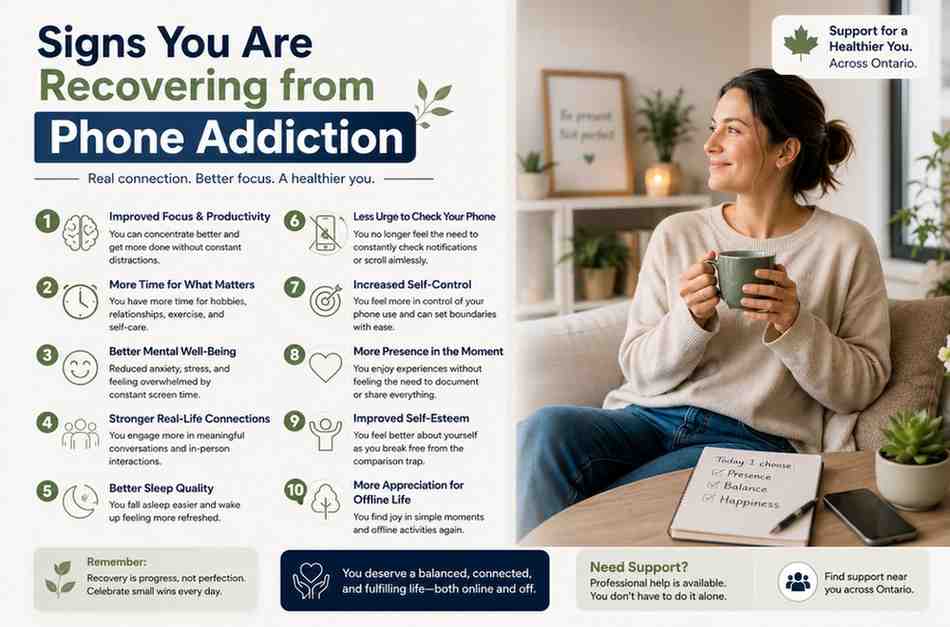
Signs You Are Recovering from Phone Addiction
Recovering from phone addiction rarely happens overnight. Progress usually appears through small but meaningful changes in behavior, emotions, relationships, and daily routines. While setbacks may occur, consistent improvements often signal that healthier habits are taking root. Recognizing these positive changes can strengthen motivation and reinforce long-term success. By paying attention to specific indicators, individuals can better evaluate their growth and continue building a balanced relationship with technology.
What Does Recovery from Phone Addiction Really Mean?
Many people assume recovery means using a phone as little as possible. However, recovery typically involves gaining control over technology rather than eliminating it.
A healthy recovery allows individuals to use devices when necessary while avoiding compulsive or emotionally driven behaviors. Consequently, technology becomes a useful tool instead of a constant distraction.
Several positive changes often emerge during this process:
- Improved self-control
- Better concentration
- Reduced anxiety around phone use
- Healthier sleep patterns
- Stronger relationships
- Greater productivity
These changes may develop gradually, yet they often indicate meaningful progress.
You No Longer Reach for Your Phone Automatically
One of the earliest signs of recovery involves increased awareness of phone-related habits.
Pausing Before Picking Up Your Device
Many people struggling with phone addiction grab their phones without thinking. During recovery, this automatic behavior begins to fade.
Instead of reacting impulsively, individuals start making conscious decisions about when and why they use their devices. Consequently, screen time becomes more intentional.
Reduced Habitual Checking
Checking notifications every few minutes often signals dependency.
As recovery progresses, people commonly notice that they:
- Check messages less frequently
- Ignore nonessential notifications
- Leave their phones untouched for longer periods
- Feel less urgency to respond immediately
These behavioral shifts demonstrate improved self-regulation.
Your Screen Time Starts Declining Naturally
Reduced screen time often serves as a measurable indicator of progress.
Less Dependence on Digital Entertainment
Many individuals spend hours scrolling through social media feeds, watching short videos, or switching between apps.
During recovery, these activities lose some of their appeal. Instead, people begin allocating time to more meaningful pursuits.
Moreover, reduced screen time often occurs naturally rather than through constant self-enforcement.
More Balance Throughout the Day
Recovery encourages healthier daily routines.
For example, individuals may spend more time:
- Exercising
- Reading
- Socializing
- Pursuing hobbies
- Completing tasks
As a result, phones occupy a smaller portion of daily life.
You Feel Less Anxious Without Your Phone
Emotional changes often provide some of the clearest signs of recovery.
Reduced Fear of Missing Out
Many people experience anxiety when they cannot immediately access their phones.
As recovery develops, this fear often decreases. Individuals become more comfortable stepping away from digital platforms without worrying about missed updates.
Greater Comfort During Disconnection
Being away from a phone may have previously caused restlessness or discomfort.
However, recovering individuals frequently notice they can:
- Attend meetings without checking devices
- Enjoy meals without scrolling
- Participate in conversations fully
- Spend time outdoors without constant connectivity
This growing comfort reflects healthier emotional dependence.
Your Attention Span Improves
Excessive phone use can weaken concentration by encouraging constant interruptions.
Better Focus on Single Tasks
During recovery, many individuals regain the ability to focus on one activity at a time.
Consequently, they may experience:
- Improved work performance
- Better academic results
- Increased productivity
- Higher-quality output
The ability to maintain attention often strengthens steadily over time.
Fewer Distractions During Important Activities
Phone addiction frequently disrupts tasks through repeated notification checks.
As recovery continues, individuals become more capable of completing activities without interruption.
This improvement often creates a stronger sense of accomplishment and efficiency.
You Sleep More Consistently
Sleep quality often improves significantly during recovery.
Reduced Nighttime Screen Use
Many people struggling with phone addiction spend late-night hours browsing content.
As healthier habits develop, screen use before bed typically decreases.
Moreover, individuals often create boundaries such as:
- Device-free bedrooms
- Earlier screen shutdown times
- Reduced notification access at night
- Consistent sleep schedules
These adjustments support better rest.
Improved Morning Routines
Recovery often changes how people begin their day.
Instead of immediately reaching for a phone, individuals may:
- Stretch
- Exercise
- Eat breakfast mindfully
- Plan daily priorities
Consequently, mornings feel less rushed and more productive.
Your Relationships Become Stronger
Technology overuse can interfere with meaningful human interaction.
More Presence During Conversations
One major sign of progress involves becoming fully engaged during discussions.
Instead of dividing attention between conversations and screens, recovering individuals focus more effectively on the people around them.
This behavioral change often improves communication quality.
Greater Emotional Connection
Relationships frequently benefit when phone use becomes less dominant.
As screen distractions decrease, people often experience:
- Better listening skills
- More meaningful conversations
- Increased empathy
- Stronger family connections
- Improved friendships
These outcomes can reinforce continued recovery efforts.
You Handle Boredom More Effectively
Many individuals use phones as a quick escape from boredom.
Finding Value in Quiet Moments
Recovery often changes how people respond to unoccupied time.
Instead of immediately seeking digital stimulation, individuals become more comfortable with stillness.
Consequently, they may spend time reflecting, planning, or engaging in creative activities.
Building New Interests
As phone use declines, opportunities for personal growth increase.
Common alternatives include:
- Art projects
- Writing
- Gardening
- Cooking
- Sports
- Music
These activities provide meaningful engagement without relying on constant screen interaction.
You Feel More Productive Throughout the Day
Productivity improvements frequently accompany recovery.
Completing Tasks More Efficiently
Phone addiction often contributes to procrastination.
As recovery progresses, individuals usually spend less time switching between apps and more time completing responsibilities.
This shift can increase both efficiency and confidence.
Improved Time Awareness
Many people underestimate the amount of time spent on phones.
During recovery, individuals become more aware of how they use their hours.
As a result, they often make better decisions regarding priorities and scheduling.
You No Longer Need Constant Notifications
Notifications frequently reinforce compulsive phone use.
Less Dependence on Alerts
One encouraging sign of recovery occurs when notifications lose their power to interrupt attention.
Instead of reacting instantly, individuals choose when to engage with incoming messages and updates.
Greater Control Over Digital Boundaries
Healthy boundaries may include:
- Turning off nonessential notifications
- Scheduling phone-free periods
- Using focus modes
- Limiting social media alerts
These practices support continued improvement.
Your Mood Becomes More Stable
Emotional regulation often improves when excessive phone use decreases.
Reduced Emotional Reactivity
Constant exposure to digital content can trigger stress, comparison, and frustration.
As screen habits improve, emotional responses often become more balanced.
Consequently, individuals may experience greater calmness throughout the day.
Improved Mental Clarity
Recovery frequently brings a clearer state of mind.
People often report:
- Better decision-making
- Reduced mental clutter
- Improved concentration
- Greater emotional awareness
These benefits contribute to overall well-being.
You Spend More Time Engaging With Real-Life Activities
Recovery encourages participation in offline experiences.
Prioritizing Physical Experiences
Instead of documenting every moment digitally, recovering individuals increasingly focus on direct participation.
This shift can enhance enjoyment and personal satisfaction.
Building Meaningful Daily Routines
Healthy routines often include:
- Exercise
- Family time
- Outdoor activities
- Skill development
- Personal goals
Such habits help create lasting balance.
You Recognize Triggers Before They Control Behavior
Awareness plays a significant role in recovery.
Identifying Emotional Triggers
Many people use phones to cope with stress, loneliness, anxiety, or frustration.
Recovery allows individuals to recognize these triggers before they automatically reach for their devices.
Choosing Healthier Responses
Instead of scrolling, recovering individuals may choose alternatives such as:
- Walking
- Journaling
- Meditation
- Talking with friends
- Practicing hobbies
These responses encourage healthier coping mechanisms.
You Feel More Confident in Your Ability to Control Phone Use
Confidence often grows alongside progress.
Rather than feeling controlled by technology, individuals begin trusting their ability to make intentional choices.
Moreover, successful behavior changes reinforce motivation and strengthen long-term commitment.
This confidence represents one of the strongest indicators that recovery is moving in the right direction.
You Can Leave Your Phone in Another Room
Physical separation from a phone can feel challenging for someone struggling with dependency. As recovery progresses, this task often becomes much easier.
Reduced Attachment to Constant Access
Many people with problematic phone habits feel compelled to keep their devices within reach at all times.
However, recovering individuals often notice that they can leave their phones:
- In another room
- Inside a bag
- On silent mode
- Away during meetings
- Away during family activities
This change reflects growing independence from digital stimulation.
Less Urge to Check Devices Repeatedly
A recovering individual may occasionally think about their phone, yet the urge becomes less intense.
Consequently, periods of separation no longer create significant discomfort or distraction.
You Enjoy Social Events Without Focusing on Your Phone
Social situations often reveal meaningful progress.
Greater Engagement in Conversations
Phone addiction can pull attention away from real-world interactions.
As recovery advances, individuals often participate more actively in discussions and group activities.
Moreover, they maintain eye contact more consistently and contribute more thoughtfully to conversations.
More Meaningful Experiences
People recovering from phone addiction frequently notice that social events become more enjoyable.
Instead of dividing attention between screens and surroundings, they immerse themselves fully in the moment.
This shift often leads to deeper connections and stronger memories.
You Feel Less Pressure to Document Everything
Many individuals develop habits that revolve around capturing photos, videos, and updates for online sharing.
Living in the Moment
Recovery often encourages a healthier perspective on experiences.
Rather than immediately reaching for a camera or social media platform, individuals spend more time enjoying events as they happen.
Consequently, experiences feel more authentic and fulfilling.
Reduced Need for Validation
Excessive phone use sometimes connects with a desire for likes, comments, or digital approval.
As recovery strengthens, people often place less importance on external validation and more value on personal satisfaction.
You Recover More Quickly From Setbacks
Progress rarely follows a perfectly straight path.
Viewing Setbacks Realistically
Occasional periods of increased phone use do not automatically erase progress.
Recovering individuals typically recognize setbacks as temporary challenges rather than permanent failures.
This mindset helps maintain motivation.
Returning to Healthy Habits Faster
Instead of remaining stuck in unhealthy patterns, individuals often return to productive routines more quickly.
Examples include:
- Re-establishing screen limits
- Reducing social media use
- Restoring bedtime routines
- Practicing mindfulness techniques
Consequently, recovery becomes more sustainable.
Your Work and Academic Performance Improve
Excessive phone use often interferes with performance in professional and educational settings.
Better Task Completion
As distractions decrease, individuals frequently complete assignments more efficiently.
This improvement can lead to:
- Better organization
- Stronger productivity
- Higher-quality results
- Improved time management
These benefits reinforce positive behavioral changes.
Improved Concentration During Long Tasks
Many recovering individuals notice they can remain focused for longer periods.
Moreover, they require fewer breaks caused by unnecessary phone checking.
This improvement often contributes to greater confidence and achievement.
You Become More Mindful About Technology Use
Mindfulness plays an important role in recovery.
Using Technology With Purpose
Rather than opening apps out of habit, recovering individuals increasingly use their phones with clear intentions.
For example, they may:
- Send a specific message
- Complete a task
- Access information
- Make a call
Afterward, they often put the device away instead of continuing to scroll.
Evaluating Digital Habits Regularly
Many people in recovery periodically review their screen habits.
This awareness helps identify potential concerns before they become larger problems.
Consequently, long-term progress becomes easier to maintain.
You Experience Better Physical Well-Being
Phone addiction can affect physical health in several ways.
Reduced Eye Strain and Physical Discomfort
Extended screen exposure often contributes to:
- Eye fatigue
- Neck tension
- Poor posture
- Headaches
As phone use decreases, these symptoms may improve significantly.
Increased Physical Activity
Recovery often creates additional free time.
Many individuals choose to spend that time engaging in movement-based activities such as:
- Walking
- Running
- Cycling
- Yoga
- Sports
These habits support both physical and mental wellness.
You Develop Stronger Self-Discipline
Recovery extends beyond phone use.
Improved Decision-Making
Successfully managing technology habits often strengthens overall self-control.
As a result, individuals may make better choices regarding:
- Time management
- Work responsibilities
- Health goals
- Personal commitments
This broader improvement highlights the positive impact of behavioral change.
Greater Confidence in Personal Boundaries
Healthy boundaries become easier to maintain once individuals gain control over phone-related behaviors.
Consequently, they feel more capable of protecting their time and attention.
You No Longer Feel Controlled by Social Media
Social media platforms frequently contribute to excessive phone use.
Intentional Social Media Engagement
Recovery often changes how people interact with digital platforms.
Instead of endless scrolling, individuals use social media for specific purposes and then move on to other activities.
This approach reduces wasted time and emotional exhaustion.
Less Comparison With Others
Constant online exposure can encourage unhealthy comparison.
As phone habits improve, many individuals focus more on their own goals and daily experiences.
Consequently, self-esteem and emotional stability often improve.
You Maintain Consistent Recovery Habits
Consistency often provides one of the clearest signs of lasting progress.
Healthy Habits Become Routine
Over time, positive behaviors require less effort.
Examples include:
- Limiting screen time
- Following sleep schedules
- Engaging in offline activities
- Practicing mindful technology use
These habits gradually become part of everyday life.
Recovery Feels Sustainable
Rather than relying on constant willpower, recovering individuals build systems that support healthier choices automatically.
This transition often marks a significant milestone.
Professional Support Continues to Strengthen Progress
Many individuals benefit from professional assistance during recovery.
Therapy can help identify triggers, improve coping strategies, and establish practical goals. Those participating in phone addiction therapy Ontario programs often report that structured support helps reinforce healthy habits and encourages long-term accountability.
Professional guidance can also provide valuable tools for managing setbacks and maintaining progress.
Key Indicators of Recovery at a Glance
The following signs frequently indicate meaningful progress:
- Reduced screen time
- Less anxiety without a phone
- Improved focus
- Better sleep quality
- Stronger relationships
- Greater productivity
- Increased self-control
- Healthier emotional responses
- More offline activities
- Better physical well-being
- Reduced dependence on notifications
- Improved time management
- Stronger boundaries
- Increased confidence
- Sustainable daily habits
While every recovery journey differs, these indicators often suggest positive movement toward healthier technology use.
Conclusion
Recovery from phone addiction becomes visible through meaningful changes in daily behavior, emotional health, productivity, relationships, and overall well-being. While progress may occur gradually, each positive step reflects growing control over technology use. Moreover, healthier habits often create benefits that extend far beyond screen time reduction. By recognizing these signs and maintaining consistent routines, individuals can build a balanced relationship with technology and support lasting personal growth.
FAQs
1. How long does recovery from phone addiction take?
Recovery timelines vary based on individual habits, lifestyle factors, and commitment to change. Some people notice improvements within a few weeks, while others require several months. Consistent effort, healthy routines, and realistic expectations often contribute to steady and lasting progress.
2. Is occasional excessive phone use a sign of failure?
No. Temporary increases in phone use can occur during stressful periods or major life changes. What matters most is the ability to recognize the pattern, make adjustments, and return to healthier habits without allowing the setback to become permanent.
3. Can recovery improve mental well-being?
Yes. Many individuals experience reduced stress, improved emotional regulation, and better concentration after reducing problematic phone use. As digital dependency decreases, people often gain more control over their attention and emotional responses.
4. Does recovery require deleting all social media accounts?
Not necessarily. Many people achieve recovery by using social media intentionally and setting healthy limits. The goal often focuses on balanced usage rather than complete elimination unless a specific platform consistently contributes to unhealthy behavior.
5. Why does sleep improve during recovery?
Reduced screen exposure before bedtime often supports healthier sleep patterns. Limiting nighttime phone use can help individuals fall asleep more easily, improve sleep quality, and create more consistent daily routines.
6. Can recovery improve productivity at work?
Yes. Reduced distractions allow individuals to focus more effectively on tasks and responsibilities. Consequently, many people notice improved efficiency, stronger concentration, and better overall performance in professional and academic settings.
7. What role does mindfulness play in recovery?
Mindfulness encourages awareness of phone-use habits and emotional triggers. By recognizing impulses before acting on them, individuals can make more intentional decisions and avoid automatic behaviors that contribute to excessive screen time.
8. Are stronger relationships a sign of recovery?
Absolutely. Reduced phone use often increases attention during conversations and social interactions. As a result, communication improves, emotional connections deepen, and relationships become more meaningful and satisfying.
9. How can someone maintain progress after recovery?
Maintaining progress requires consistent habits, clear boundaries, and ongoing self-awareness. Regularly reviewing screen time, prioritizing offline activities, and addressing triggers early can help sustain positive behavioral changes over the long term.
10. Should someone seek professional help during recovery?
Professional support can be valuable when phone use significantly affects daily life, relationships, or mental well-being. Therapy can provide personalized strategies, accountability, and practical tools that support long-term behavioral improvement.