Differences Between Therapy, Detox, and Rehabilitation
People seeking help for substance-related challenges often encounter terms such as therapy, detox, and rehabilitation. Although these services frequently work together, they serve different purposes within the recovery process. Confusion about these differences can make it difficult to determine which type of support may be appropriate for a particular situation. By examining how therapy, detox, and rehabilitation function, individuals can gain greater clarity about recovery options and the role each service plays in promoting long-term well-being.
Why Understanding These Terms Matters?
Many individuals assume therapy, detox, and rehabilitation mean the same thing.
However, each service addresses different aspects of recovery and personal health.
Different Goals Require Different Approaches
Recovery often involves multiple stages.
For example:
- Physical stabilization
- Emotional support
- Behavioral change
- Relapse prevention
- Lifestyle adjustments
Because each stage has unique requirements, different forms of support become necessary.
Better Decision-Making
A clear understanding of these services helps individuals make informed decisions regarding treatment and recovery planning.
Consequently, people can access support that aligns with their specific needs and circumstances.
What Is Detox?
Detox is often the first step in the recovery process.
Definition of Detox
Detoxification, commonly called detox, refers to the process of removing substances from the body while managing withdrawal symptoms.
This stage focuses primarily on physical stabilization rather than long-term behavioral change.
Primary Goals of Detox
Detox aims to:
- Manage withdrawal symptoms
- Improve physical stability
- Support immediate safety
- Prepare individuals for ongoing treatment
These goals help create a foundation for further recovery efforts.
How Detox Works
Detox procedures vary depending on several factors.
Initial Assessment
Before detox begins, professionals typically evaluate:
- Substance use history
- Physical health
- Mental health concerns
- Withdrawal risks
- Current symptoms
This assessment helps determine the most appropriate level of care.
Withdrawal Management
Withdrawal experiences differ significantly between individuals.
Factors influencing withdrawal include:
- Type of substance
- Duration of use
- Frequency of use
- Physical health status
Professional supervision often helps manage symptoms safely and effectively.
What Detox Does Not Address
Although detox plays an important role, it has limitations.
Detox Does Not Focus on Behavior Change
Detox addresses physical dependence but generally does not address the emotional, psychological, or behavioral factors that contribute to substance use.
Consequently, additional support often becomes necessary.
Detox Is Not Long-Term Treatment
Many people mistakenly assume detox alone resolves substance use challenges.
However, recovery frequently requires ongoing support beyond physical stabilization.
For this reason, individuals often continue with therapy or rehabilitation after detox.
What Is Therapy?
Therapy focuses on emotional, behavioral, and psychological aspects of recovery.
Definition of Therapy
Therapy involves structured conversations and evidence-based interventions designed to help individuals address thoughts, emotions, and behaviors related to substance use.
Unlike detox, therapy focuses on long-term change rather than immediate physical stabilization.
Primary Goals of Therapy
Therapy often aims to:
- Improve self-awareness
- Develop coping skills
- Address emotional challenges
- Reduce harmful behaviors
- Support long-term recovery
These objectives contribute to lasting behavioral improvement.
How Therapy Works
Therapy typically involves regular sessions with a trained professional.
Assessment and Goal Setting
Early sessions often focus on:
- Personal history
- Current challenges
- Recovery goals
- Emotional concerns
- Lifestyle factors
This information helps create an individualized treatment plan.
Developing Recovery Skills
Therapy frequently focuses on skills such as:
- Stress management
- Emotional regulation
- Communication
- Problem-solving
- Relapse prevention
These abilities often support sustainable recovery.
Benefits of Therapy
Therapy provides advantages that extend beyond substance-related concerns.
Improved Emotional Well-Being
Many individuals experience improvements in:
- Confidence
- Emotional stability
- Self-awareness
- Resilience
These benefits can positively affect multiple areas of life.
Stronger Relationships
Therapy often helps improve communication and interpersonal functioning.
As a result, individuals may experience healthier relationships with family members, friends, and colleagues.
What Is Rehabilitation?
Rehabilitation, often called rehab, provides structured treatment focused on recovery and lifestyle change.
Definition of Rehabilitation
Rehabilitation is a broader treatment process that may include therapy, education, skill development, and recovery planning.
It often addresses both physical and psychological aspects of substance use challenges.
Primary Goals of Rehabilitation
Rehabilitation commonly focuses on:
- Recovery support
- Behavioral change
- Skill development
- Relapse prevention
- Lifestyle improvement
This broader approach distinguishes rehabilitation from detox alone.
How Rehabilitation Works
Rehabilitation programs vary in structure and intensity.
Comprehensive Assessment
Many rehabilitation programs begin with an in-depth evaluation.
Professionals may assess:
- Physical health
- Mental health
- Substance use patterns
- Recovery goals
- Social support systems
This assessment guides treatment planning.
Structured Treatment Plans
Rehabilitation often includes multiple components such as:
- Individual therapy
- Group sessions
- Educational activities
- Recovery planning
- Skill development
These elements work together to support long-term progress.
The Main Difference Between Detox, Therapy, and Rehabilitation
Each service addresses a different aspect of recovery.
Detox Focuses on Physical Stabilization
Detox primarily helps individuals manage withdrawal symptoms and achieve physical stability.
Its focus remains medical and short-term.
Therapy Focuses on Emotional and Behavioral Change
Therapy addresses thoughts, emotions, coping strategies, and behavioral patterns.
Its purpose involves promoting long-term recovery and personal growth.
Rehabilitation Focuses on Structured Recovery
Rehabilitation combines multiple treatment approaches into a broader recovery program.
It often includes therapy while addressing additional recovery-related needs.
How Do These Services Often Work Together?
Although detox, therapy, and rehabilitation differ, they frequently complement one another.
A Step-by-Step Recovery Process
Many individuals begin with detox when physical withdrawal symptoms require attention.
After physical stabilization, therapy and rehabilitation often provide continued support for emotional and behavioral change.
This progression helps address both immediate and long-term recovery needs.
Building a Stronger Recovery Foundation
Each service contributes unique benefits.
For example:
- Detox supports physical stabilization.
- Therapy addresses emotional and behavioral concerns.
- Rehabilitation provides structured recovery support.
Together, these services can create a more complete recovery approach.
When Detox May Be Appropriate
Detox is not necessary for every individual.
However, it may be recommended in certain situations.
Physical Dependence on Substances
Some substances can create physical dependence.
When dependence develops, withdrawal symptoms may occur after reducing or stopping use.
Detox helps manage these symptoms safely.
Managing Withdrawal Risks
Withdrawal experiences vary considerably.
Certain situations may require medical supervision to reduce risks and support physical well-being during the stabilization process.
Consequently, professional assessment often plays an important role.
When Therapy May Be Appropriate
Therapy can support individuals at various stages of recovery.
Addressing Emotional Challenges
Many people seek therapy to address concerns such as:
- Anxiety
- Stress
- Depression
- Low self-esteem
- Relationship difficulties
These issues may contribute to or result from substance-related challenges.
Supporting Long-Term Change
Therapy helps individuals identify patterns, develop healthier coping mechanisms, and strengthen decision-making abilities.
As a result, it often supports long-term recovery goals.
When Rehabilitation May Be Appropriate
Rehabilitation may be beneficial when individuals need structured and ongoing support.
Need for a Structured Environment
Some individuals benefit from a more organized treatment setting.
Rehabilitation programs often provide:
- Daily routines
- Recovery education
- Therapeutic support
- Goal-focused planning
This structure can improve consistency and accountability.
Addressing Multiple Recovery Needs
Rehabilitation frequently addresses a combination of physical, emotional, and behavioral concerns.
Therefore, it may provide broader support than therapy alone.
Comparing Duration and Intensity
The duration of each service often differs significantly.
Detox Duration
Detox generally lasts for a relatively short period.
The exact timeline depends on factors such as:
- Substance type
- Withdrawal severity
- Physical health status
The primary objective remains physical stabilization.
Therapy Duration
Therapy may continue for weeks, months, or longer depending on individual goals and circumstances.
Progress often develops gradually through consistent participation.
Rehabilitation Duration
Rehabilitation programs vary widely in length and intensity.
Some programs involve shorter treatment periods, while others provide more extended support.
The duration often reflects individual recovery needs.
The Role of Mental Health in Recovery
Mental health frequently influences recovery outcomes.
Addressing Emotional Factors
Many individuals face emotional challenges that affect behavior and decision-making.
Therapy and rehabilitation often help address concerns such as:
- Chronic stress
- Anxiety
- Depression
- Emotional regulation difficulties
Improving emotional well-being can support healthier choices.
Supporting Psychological Growth
Recovery often involves personal growth as well as behavioral change.
Individuals may develop:
- Greater self-awareness
- Improved confidence
- Better coping skills
- Stronger resilience
These improvements often contribute to long-term success.
Relapse Prevention Across All Three Services
Relapse prevention remains an important recovery objective.
Detox and Relapse Prevention
Detox alone generally does not provide extensive relapse-prevention support.
However, it can create an opportunity for individuals to begin further treatment.
Therapy and Relapse Prevention
Therapy often focuses heavily on relapse prevention.
Common strategies include:
- Trigger identification
- Stress management
- Emotional regulation
- Healthy coping skills
These tools can reduce vulnerability to future setbacks.
Rehabilitation and Relapse Prevention
Rehabilitation frequently incorporates relapse-prevention planning throughout treatment.
Structured support helps individuals prepare for challenges they may encounter after treatment concludes.
How Family Support Fits Into Recovery
Family relationships often influence recovery significantly.
Improving Communication
Therapy and rehabilitation may help individuals strengthen communication skills.
These improvements often support healthier family interactions.
Building Stronger Support Systems
Supportive relationships can provide:
- Encouragement
- Accountability
- Emotional support
- Practical assistance
Strong support systems frequently contribute to recovery success.
Virtual and In-Person Support Options
Treatment formats have become increasingly flexible.
Benefits of In-Person Services
In-person treatment offers direct interaction within a dedicated treatment environment.
Many individuals appreciate the structure and focused attention that face-to-face sessions provide.
Benefits of Virtual Services
Virtual support offers accessibility and convenience.
Many people seeking substance use therapy in Ontario choose virtual sessions because they can access professional support while maintaining work, family, and personal responsibilities.
Both formats can support recovery when individuals participate actively and consistently.
Common Misconceptions About Recovery Services
Misunderstandings often prevent individuals from seeking appropriate support.
Misconception: Detox Solves Everything
Detox addresses physical withdrawal but generally does not resolve emotional or behavioral factors related to substance use.
Additional treatment often remains necessary.
Misconception: Therapy and Rehabilitation Are Identical
While therapy may be part of rehabilitation, rehabilitation typically includes additional components such as education, recovery planning, and structured support.
Misconception: Recovery Ends After Treatment
Recovery often involves ongoing effort and continued use of healthy coping strategies.
Treatment provides tools and support, but long-term success requires continued commitment.
Choosing the Right Type of Support
Selecting the most appropriate option depends on individual circumstances, goals, and treatment needs.
Questions to Consider
Individuals may benefit from asking:
- Am I experiencing withdrawal symptoms?
- Do I need emotional support?
- Would a structured recovery program help me?
- What challenges am I currently facing?
- What level of support do I require?
The answers often help clarify which services may be most beneficial.
Professional Assessment Matters
Recovery needs vary significantly from person to person.
A professional assessment can help determine whether detox, therapy, rehabilitation, or a combination of services is appropriate.
This individualized approach often improves treatment outcomes.
Benefits Shared by Therapy, Detox, and Rehabilitation
Although these services differ, they share several important goals.
Improved Health and Well-Being
Each service aims to support healthier functioning and improved quality of life.
Depending on the service provided, benefits may include:
- Better physical health
- Improved emotional stability
- Stronger coping skills
- Increased confidence
These improvements often contribute to overall recovery.
Support for Positive Change
Recovery frequently involves meaningful lifestyle adjustments.
All three services help individuals move toward healthier behaviors and long-term well-being.
The Importance of Long-Term Recovery Planning
Recovery extends beyond initial treatment.
Creating Sustainable Strategies
Long-term recovery often requires:
- Healthy routines
- Emotional regulation skills
- Strong support systems
- Relapse-prevention planning
- Ongoing self-awareness
These strategies help maintain progress after treatment concludes.
Preparing for Future Challenges
Life circumstances can change unexpectedly.
Therapy and rehabilitation often help individuals prepare for future stressors by strengthening resilience and problem-solving abilities.
This preparation can support lasting recovery.
How Progress Is Measured
Progress appears differently for each individual.
Behavioral Improvements
Positive changes may include:
- Reduced substance use
- Healthier routines
- Better decision-making
- Improved coping abilities
These changes often indicate meaningful growth.
Emotional Improvements
Many individuals also experience:
- Reduced stress
- Greater confidence
- Improved emotional regulation
- Better self-awareness
These benefits can strengthen recovery efforts significantly.
Relationship Improvements
Healthier communication and stronger trust frequently emerge as recovery progresses.
Improved relationships often contribute to continued success and emotional support.
The Long-Term Value of Recovery Services
Recovery services often provide benefits that extend far beyond immediate treatment goals.
Developing Life Skills
Many individuals strengthen skills such as:
- Communication
- Problem-solving
- Stress management
- Goal setting
- Emotional regulation
These abilities support personal growth and long-term well-being.
Strengthening Resilience
Resilience helps individuals navigate challenges without returning to harmful behaviors.
Therapy and rehabilitation frequently focus on building this important quality.
As resilience grows, individuals often feel better prepared to manage life’s difficulties.
Key Differences at a Glance
The following summary highlights the primary distinctions among these services.
Detox
- Focuses on physical stabilization
- Manages withdrawal symptoms
- Usually short-term
- Addresses immediate physical concerns
- Often serves as an initial step
Therapy
- Focuses on emotional and behavioral change
- Addresses coping skills and mental health
- Supports long-term recovery
- Encourages self-awareness
- Helps prevent relapse
Rehabilitation
- Provides structured treatment
- May include therapy and education
- Focuses on recovery planning
- Supports lifestyle change
- Addresses multiple recovery needs
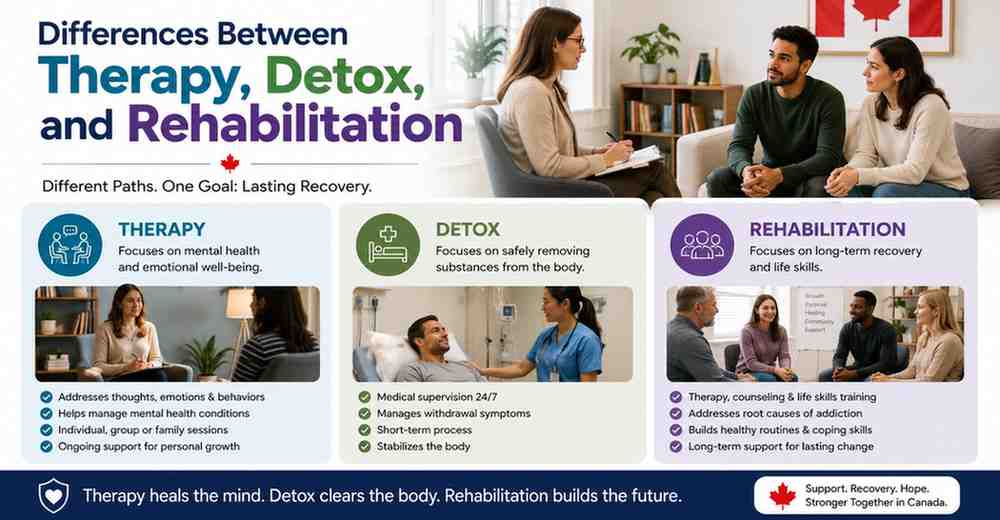
Each service plays a distinct role within the recovery process.
Why Combining Services Often Produces Better Outcomes
Many individuals benefit from using multiple forms of support.
Addressing Different Recovery Needs
Recovery often involves physical, emotional, and behavioral challenges.
Because each service focuses on a different area, combining them may provide more complete support.
Creating Continuity
Detox may address immediate physical concerns, while therapy and rehabilitation support long-term recovery.
This continuity often improves the likelihood of sustained progress.
Supporting Lasting Change
Long-term change usually requires more than physical stabilization alone.
Therapy and rehabilitation help individuals build skills and habits that support ongoing recovery and personal growth.
Conclusion
Therapy, detox, and rehabilitation each serve distinct yet complementary roles in the recovery process. Detox focuses on physical stabilization, therapy addresses emotional and behavioral change, and rehabilitation provides structured support for long-term recovery. While these services differ in purpose and approach, they often work together to promote healthier choices, stronger coping skills, and lasting well-being. By recognizing the unique function of each option, individuals can make informed decisions about recovery and access support that aligns with their personal goals and circumstances.
FAQs
1. What is the main difference between detox and therapy?
Detox focuses on managing withdrawal symptoms and achieving physical stabilization. Therapy focuses on emotional, psychological, and behavioral factors that contribute to substance use. While detox addresses immediate physical concerns, therapy supports long-term recovery and behavioral change.
2. Is detox considered addiction treatment?
Detox is an important part of the recovery process, but it typically addresses only physical withdrawal. Many individuals require additional support such as therapy or rehabilitation to address underlying emotional and behavioral factors.
3. What does rehabilitation include?
Rehabilitation often includes therapy, education, skill development, recovery planning, and relapse-prevention strategies. Programs may vary in structure, but rehabilitation generally provides broader and more intensive support than detox alone.
4. Can someone attend therapy without going through detox?
Yes. Not everyone requires detox. Individuals who are not experiencing withdrawal symptoms may participate in therapy directly to address behavioral, emotional, or substance-related concerns and work toward recovery goals.
5. How long does rehabilitation usually last?
The duration varies depending on personal needs, treatment goals, and program structure. Some rehabilitation programs are shorter, while others provide more extensive support over a longer period.
6. Does therapy help prevent relapse?
Yes. Therapy often focuses on relapse prevention through trigger identification, coping-skill development, emotional regulation, and stress-management strategies. These tools can help individuals respond more effectively to challenges.
7. Why is emotional support important during recovery?
Emotional health often influences decision-making and behavior. Therapy helps individuals address stress, anxiety, low self-esteem, and other concerns that may affect recovery and overall well-being.
8. Can family members participate in treatment?
In some situations, family involvement may support recovery. Improved communication, healthier boundaries, and stronger support systems can contribute positively to long-term progress and relationship health.
9. Are virtual recovery services effective?
Many individuals find virtual therapy and support services effective. Online options provide accessibility, flexibility, and professional guidance while allowing people to maintain personal and professional responsibilities.
10. Which option should come first: detox, therapy, or rehabilitation?
The answer depends on individual circumstances. People experiencing withdrawal symptoms may require detox first. Others may begin with therapy or rehabilitation. Professional assessment helps determine the most appropriate starting point.